Drinking Melbourne is the weekly newsletter from drinks writer Fred Siggins, unpacking what’s happening in Melbourne’s bars (and what you can learn from them), sent every Tuesday to your inbox. Get on the list here.
In a few weeks Footscray bar Mr West will play host to a tea-based cocktail masterclass led by bartending extraordinaire Nathan Beasley (Mr West, Bar Spontana) and Troy Benjamin of Blak Brews, an Indigenous-owned, Melbourne-based producer of tea blends using native Australian ingredients. Blak Brews have become local heroes in the spheres of tea and native ingredients, even winning the Innovation Award on Gordon Ramsay’s Food Stars.
I spoke to Nathan this week (as he was driving his mum to a footy function) to ask him about the upcoming event, his approach to using tea in cocktails and his fermentation program at Bar Spontana. Here’s what he had to say.
FRED SIGGINS: Can you tell me how the idea for this event came about?
NATHAN BEASLEY: Troy [the founder of Blak Brews] used to run a cafe in the city and was a regular at Black Pearl for the many years I worked there. After I left Pearl, I kept in touch with Troy over a shared love of footy, and so I still knew him as he was building the Blak Brews business making tea blends out of native Australian ingredients. We thought it would be really fun to do something together because the history of both alcohol and tea are very old, at times in opposition to each other with tea being a key part of the temperance movement, but they also have a lot in common, so we wanted to show people what they can do together.
FRED SIGGINS: What’s your approach to using tea as a cocktail ingredient?
NATHAN BEASLEY: Tea is so diverse, just like spirits. Whether you’re using a tisane or actual tea leaves, there’s so many different flavours that the possibilities are kind of endless. In particular with Blak Brews leaning into native Australian ingredients, I’m trying to tap into that. So we’re making drinks with the brewed teas, but we have also distilled some of those teas to see how that changes and evolves them. What might happen, for example, with the tannin aspect when that’s distilled?
As an example, I’ve done a pre-carbonated highball made with a quandong and strawberry gum tea, as a “G&Tea” with a tea distillate to see what impact both carbonation and distillation have on the tea.
FRED SIGGINS: And how would you go about selecting the gin to go into something like that?
NATHAN BEASLEY: In an unconventional sense, the tea is almost like a gin in itself with lots of botanicals that balance and support each other, so I’ve just leaned into that. This tea features quandong quite prominently, so it’s fruity and acidic, so I would go for something more fruit driven, building on that flavour profile.
FRED SIGGINS: I know you first and foremost as a classics guy, so what are some historical examples of tea being used in cocktails?
NATHAN BEASLEY: In terms of classics, if you look all the way back to the 1860s you can see Punch recipes featuring green tea, or English style tea. The tannin that you get from the steeping process combined with citrus, sugar and spirits really stands up, so it’s a pretty tried and true formula.
FRED SIGGINS: And given that you spent so much time focusing on classics in your bartending career, I think it’s really cool that you’re now running one of Australia’s most advanced cocktail fermentation programs at Bar Spontana. That’s been going on for a few years now, so can you tell me a bit about it, and what you’ve learned?
NATHAN BEASLEY: Josh [Hodges], who runs Spontana, wanted to focus on fermentation because of the regional Thai food we serve, which relies a lot on fermentation for depth of flavour and for its preservative effects. I do both lacto and sugar-based ferments, and also sometimes distill those ferments to try to concentrate those flavors and see how they evolve. When I first started working at Spontana, I didn’t really know what sort of impact fermentation would have on fresh ingredients, but once you realise how that works, it really opens your mind to the possibilities.
So I might ferment rhubarb, for example, with sugar and then also separately as a lacto ferment with salt, and then combine those to make a whole new product. On the menu at the moment we have a ferment where I tried to recreate a gose style beer with plums, which are in season right now. So fermented them with both lacto and sugar methods, combined with waste beer from our taps, then carbonated it to try to create a plum gose beer, which I think will go really well with our food.
FRED SIGGINS: So what kind of different characteristics do you get from those two different fermentation methods?
NATHAN BEASLEY: I always ferment wild, meaning I don’t add any yeast, just what’s naturally occurring on the fruit or in the air. I always try to make something quite complex, which is why I like to combine different fermentation methods. The sugar ferments are often going to give you a bit more barnyard character, where the lacto gives a bit more savoury and umami flavour. Salt and sugar go well together, so rather than just one flavour, by combining them I get something really complex and well-balanced.
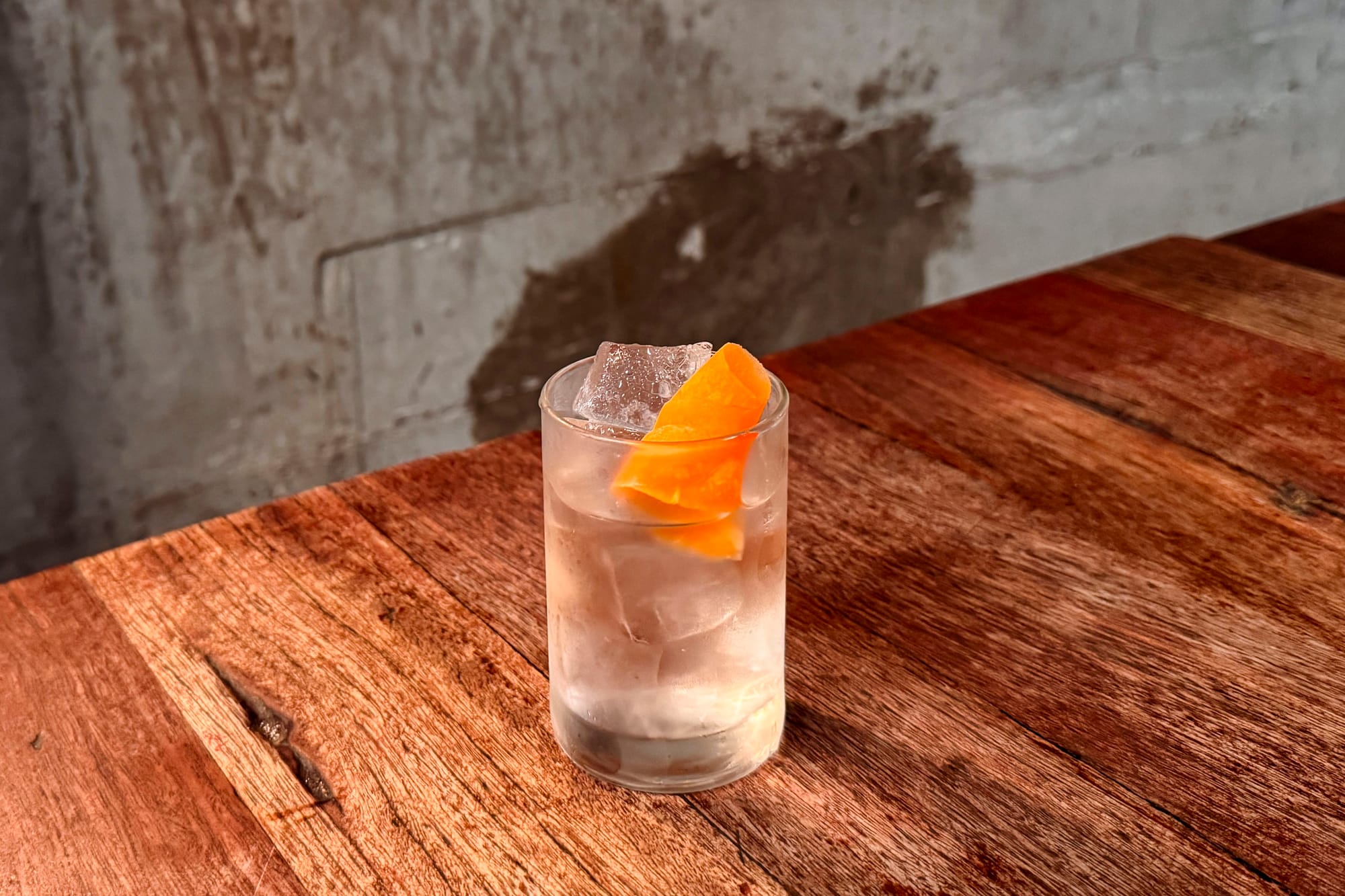
Blak Brews Vermouth (20% ABV)
Ingredients:
- 10g Blak Brews Lemon Myrtle Tea
- 10g Blak Brews Lemongrass & Ginger Dawn Tea
- 4g dried orange peel
- 20g fermented rhubarb
- 2g lemon scented gum
- 2g lavender
- 4g rosemary
- 35ml roast almond & walnut distillate
- 155ml avocado leaf distillate
- 20g tonic concentrate
- 565ml vermentino
- 70g caramelised sugar
Method:
- Steep and macerate/vac seal all listed botanicals in a 4:1 ratio of wine to distillates for a month, before filtering and blending together.
- Add tonic concentrate and caramelised sugar, filter again, and bottle.
Around The Bars
Tea Time. You can learn more about Nathan’s approach to cocktail creation, and taste the results, as well as hearing from Troy about his wonderful tea blends, at their event coming up at Mr West Bar & Bottle Shop in Footscray on Saturday, May 2nd at 3pm. Get tickets here.
Oisin You Around. And speaking of Black Pearl, last week they bid a fond farewell to one of the venue’s longest-serving managers Oisin Conneely after an epic eight-year stint. Oisin has managed to recruit and mentor some brilliant younger staff who are already kicking major goals, and leaves the venue in the very capable hands of Axel Didierjean. Thanks for taking such good care of us all, Oisin, and enjoy your well-deserved break!
Belle of the Ball. As part of their third birthday celebrations last week, Bar Bellamy has given an incredible gift to the bartending community by opening up free access to all of their cocktail specs from the last couple of years. With over 100 recipes from one of the city’s best drinks programmes here, it’s an amazing resource, shared in the spirit of community and collaboration. Check out the recipes here.