

Drinking Melbourne is the weekly newsletter from drinks writer Fred Siggins, unpacking what’s happening in Melbourne’s bars (and what you can learn from them), sent every Tuesday to your inbox. Get on the list here.
In this Melbourne briefing:
- a deep dive into Melbourne’s history with espresso and alcohol, from sly pours to Espresso Martinis;
- the state of coffee cocktails in Australia right now;
- advice on getting the right espresso for your cocktails;
- the new cult coffee favourite, Good Measure’s Mont Blanc;
- 9 drinks-focused events to hit at Melbourne Food & Wine Festival.
Espresso is one of the most nostalgic aromas in the world to me. I grew up in the inner north of Melbourne and spent my Saturdays as a kid wandering up and down Lygon Street in Carlton — in so many ways the cradle of civilisation for Australian food and drink — with gelato dribbling down my chin and the smell of coffee and pizza filling my impressionable nostrils.
My dad often led those excursions, nostalgic for his days at Melbourne Uni in the 1950s, when he spent his evenings on Lygon Street sipping cappuccinos and munching capricciosa pizzas while the rest of Australia was still on meat-and-three. During that mid-century period, thanks to our large population of Mediterranean transplants, Melbourne’s attitude towards alcohol consumption took a continental turn.
As some of the first places outside Europe to serve real espresso coffee, cafes in areas like Carlton became trendy among bohemian Melburnians (like my dad) looking for an alternative to the smelly crush of the six o’clock swill. It was an open secret that many of these cafes would slide you a sly coffee cup full of red wine, or dose your espresso with amaretto. But the restrictive liquor laws introduced during world war one remained.
It wasn’t until the late 1980s that Victoria’s licensing laws were finally overhauled, the state having the most restrictive in the country to the most liberal. Restaurants could now sell alcohol without food, and hotels (that is to say, pubs) no longer had to provide accommodation. The change in laws championed small, European-style bars where you could pop in for a coffee or a beer. Thus, Melbourne’s drinking and cafe cultures are one in the same, indelibly tied together thanks to the influence of Mediterranean Melburnians.
“The move from an Anglo-centric tea drinking culture in Australia to one obsessed with coffee was fuelled by migration,” says Melbourne-based journalist and author Michael Harden, who literally wrote the book on Lygon Street’s influence on Australian food and drink culture. “And it was in the 1980s that coffee began to take on a more elevated, quasi-essential status. This development of modern Melbourne cafe culture synced perfectly with the overhaul of Victoria's licensing laws. Cafes like Mario’s in Fitzroy could now serve booze, and their casual but sophisticated approach acted as something of a template for the small bar boom that followed. This blurring of lines between bar, cafe, pub and restaurant normalised the idea of quality coffee and booze co-existing in the same space and, subsequently, the inevitable evolution of them co-existing in the same glass,” he says.
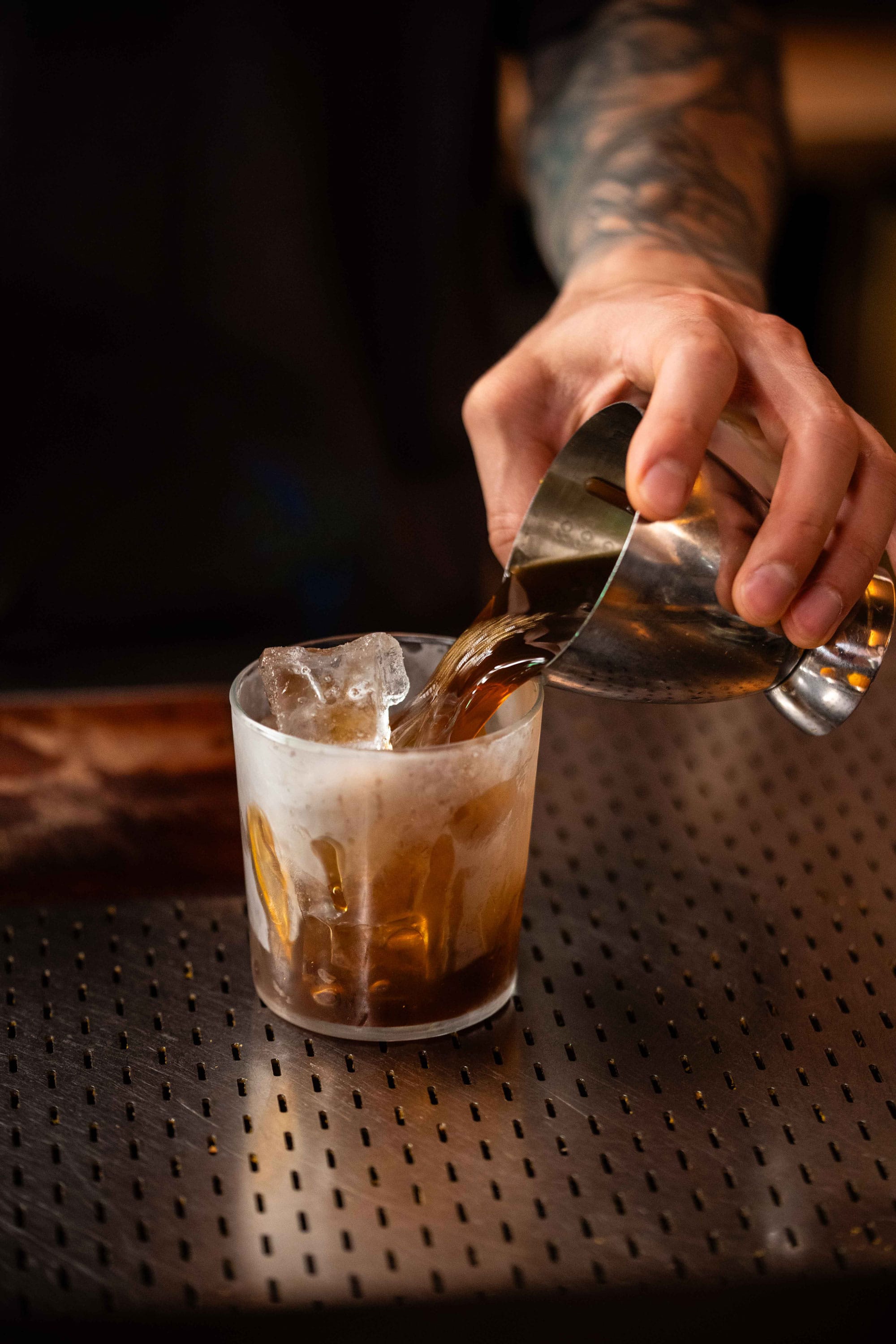
That small bar boom in the late 90s and early 2000s, which saw the opening of bars like Gin Palace, Siglo, 1806 and Black Pearl, saw the coffee-booze connection take on new life in the form of the Espresso Martini. Because cocktails were a new concept for most Aussies at the time, every single one of these bars had full-sized, commercial espresso machines to lure the after dinner crowd. And with an influx of British bartenders thanks to the working holiday visa scheme, London bartending legend Dick Bradsell’s famous ‘wake me up, then fuck me up’ cocktail was an obvious way to entice espresso-obsessed Melburnians to try mixed drinks.
Remembering the hundreds of shots of fresh espresso I used to pull every Saturday night at Black Pearl just for ‘Spressy Marts, it worked. These days, the Espresso Martini is probably Australia’s most-ordered cocktail, appearing on the drinks list everywhere from your local pub to three-hat restaurants, not to mention premixed in a can from Dan Murphy’s. But with espresso now firmly entrenched as part of Australian drinking culture, the creative minds of our booze industry are incorporating coffee in new ways, and with new cultural influences that go way beyond European tradition.
Thinking of modern coffee cocktails, there are a couple that always come to mind: Darren Leaney’s incredible Tiramisu Milk Punch created during his time at Capitano (which CBD restaurant Aru has now updated with dandelion and pandan syrup), and of course the unstoppable Africola at PS40, its juxtapositions of temperature and texture a multisensory assault of deliciousness. But let’s not stop there.