In this briefing:
- Michael Callahan — the man who made 28 Hong Kong Street a legend — on his new four-founder bar in Chengdu;
- The Common Measure, where four bartenders with wildly different styles agree on the drink but not the method — so you can order a Daiquiri three ways;
- Why Callahan says China is the best cocktail market in the world right now;
- The Last Word — a micro mezcal bar comes to town, as does Bangkok bar F*nkytown.
Welcome back to Boothby’s Singapore briefing, where this week Fred Siggins takes a look at what one of Singapore’s most instrumental bartenders of the last 20 years is doing in Chengdu, China — see his interview with Michael Callahan from The Common Measure below.
If you’re enjoying this email and the focus on Singapore, please share the newsletter with a friend so we can get the word out further — it’s the best (and cheapest!) way to support the kind of independent bar journalism we do here at Boothby.
And in the meantime, do give us a follow on Instagram at @boothbydrinks, and send any tips, intel, or feedback to me direct at sam@boothby.com.au. I’d love to hear from you.
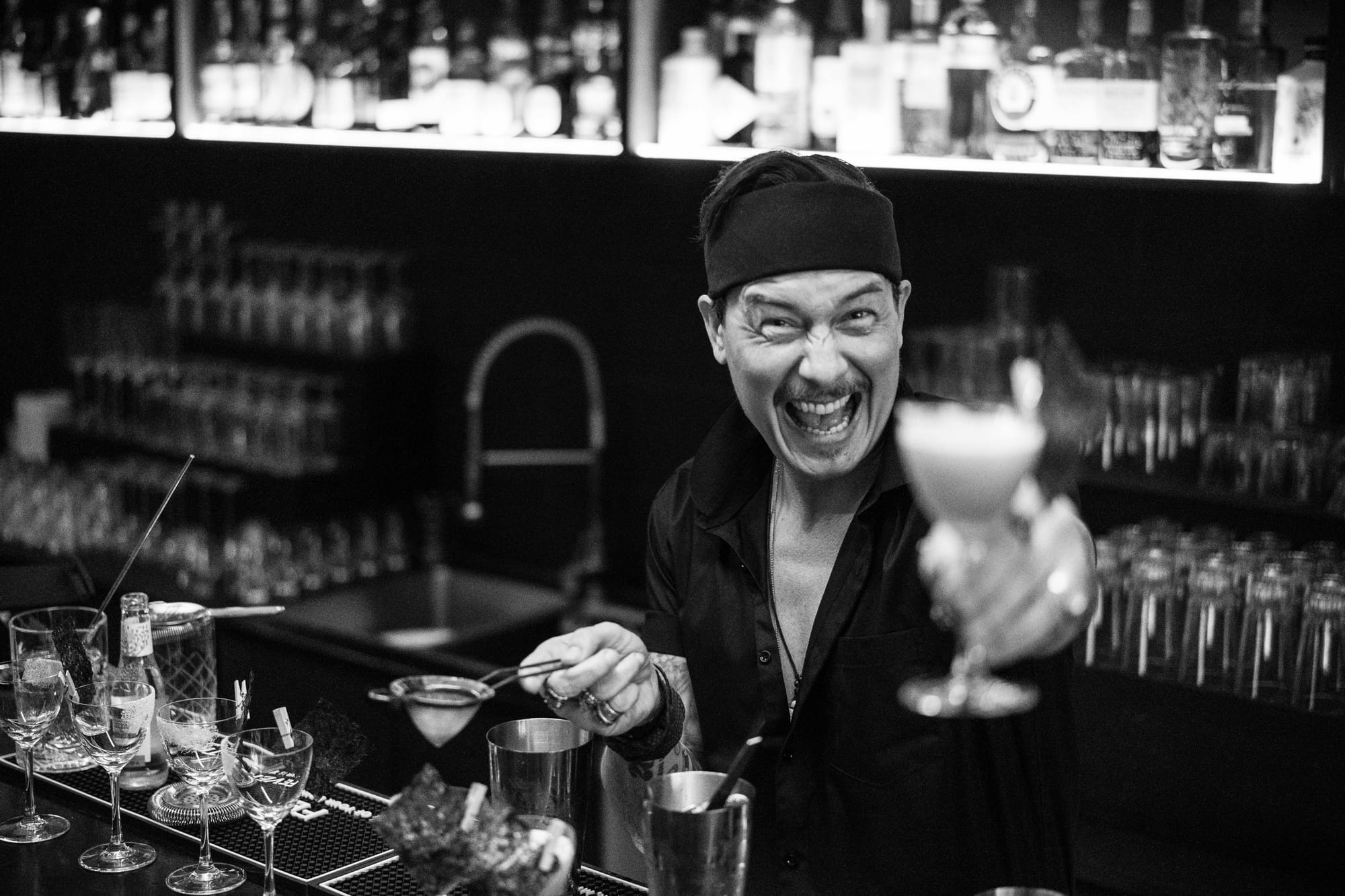
Michael Callahan is a US-born bartender and operator, one whose time at legendary bar 28 Hong Kong Street saw it become one of the most influential cocktail venues in Asia, and the launching pad for the careers of many of the region's most successful bartenders.
After closing his most recent bar, Boat Quay’s Deadfall Cantina in 2025, Callahan has a new bar, The Common Measure in Chengdu, China, which opened in August of this year. The bar is a partnership with three other influential bartenders from around Asia — Peter Chua (Night Hawk, Singapore) Ethan Liu (CMYK, Changsha), and Harold Wu (Speak Low, Shanghai) — and is billed as a blend of bartending influences from across the globe.
Michael visited Melbourne recently for a guest shift at Fitzroy’s Triple U, and I sat down with him before service to get the lowdown on the new venture and the cocktail scene in China.
FRED SIGGINS: Tell me about the new bar. What’s the concept and what’s the vibe for people who haven’t had a chance to get there?
MICHAEL CALLAHAN: The Common Measure was created by four veteran bartenders. We’ve all known each other for many years and represent different eras of the industry, both in its trajectory throughout the years and in its geographical development, from New York in the 90s to China through the 2000s and Singapore in the early 2000s. The name The Common Measure is the point where all of our ideas, our experience, our perceptions overlap. It’s a melting pot or a trader’s port, if you will, of life and experience and technique.
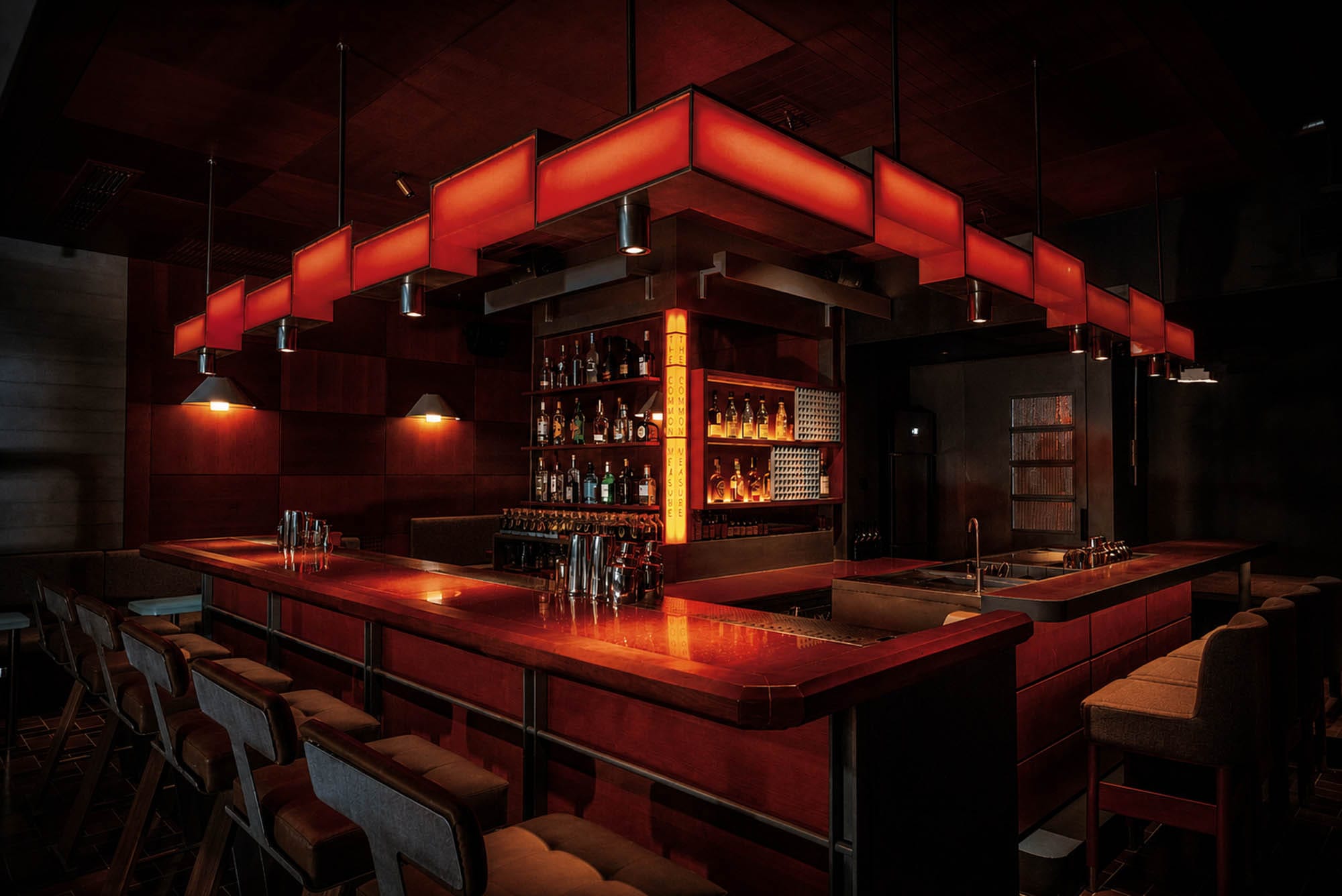
Now the vibe is kind of different for everyone, and it’s like that by design. Everywhere you sit in the bar, you get a different experience. There are five unique zones that offer a different volume, a different view, so every time you come in, you can have a different experience. There are seats all around each of the three bar stations, and the main station is very western in style with an elevated bar top with the workstation below. But then just to the left is an island station that’s built at kitchen counter level, so there’s no separation between the bartenders and the guests.
FRED SIGGINS: So within all that, what’s the common experience that anyone who walks in will have? What brings it all together?
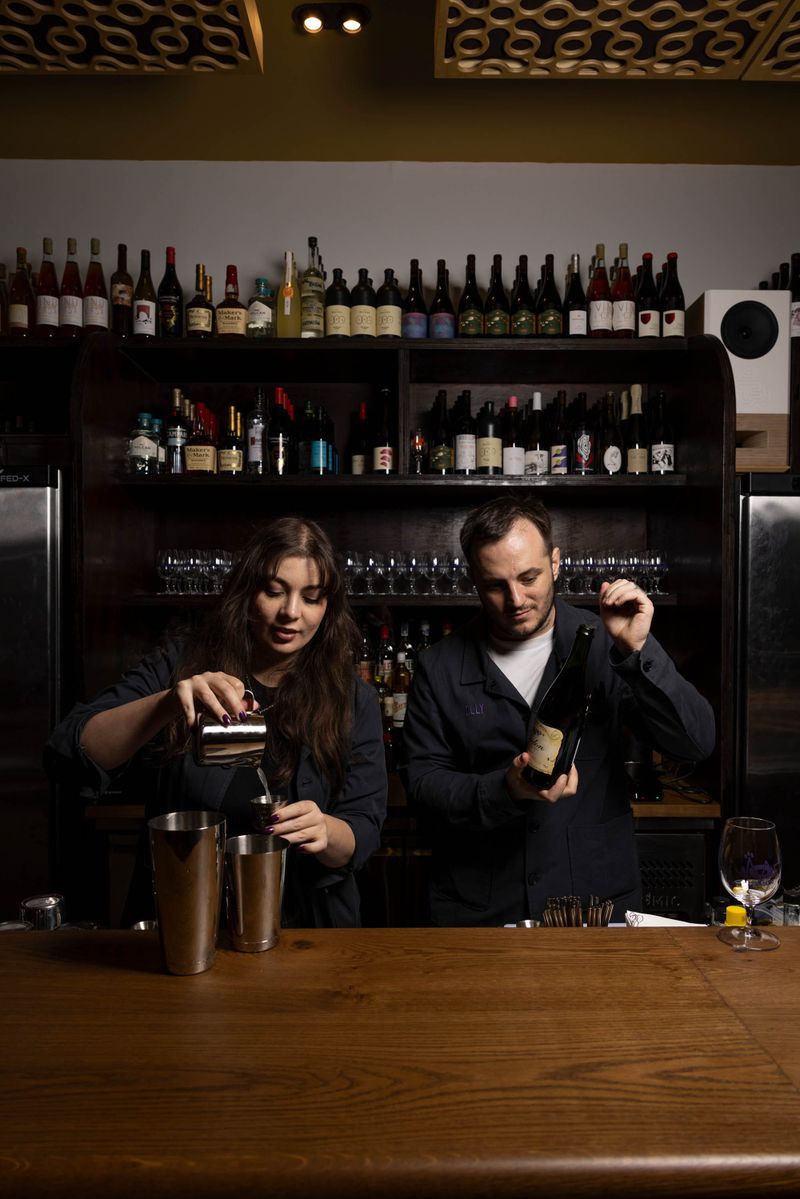
MICHAEL CALLAHAN: The common thing is consistency of execution. So we have four bosses who use four wildly different techniques of bartending, and we allow our staff to employ any technique that they want. But the drink that comes out has to look, taste, have the temperature, the texture, the consistency of what we agree it should be.
How each bartender gets there, we’re actually not very strict about. And that’s very difficult to execute because you need to make sure to train your staff on so many different techniques, but it also allows growth of the individual. We’re not trying to force you into one system that everybody has to learn. We’re trying really hard to make sure that each of our staff feel natural in their development and their growth. And because we have four bosses, if we see that you’re having a problem or you’re struggling with one particular technique, then one of us will be a master in that technique and can help them develop.
FRED SIGGINS: So how did you decide what that final standard would be? Did you just sit down and hash it out for each drink on the list?
MICHAEL CALLAHAN: Exactly. When we were developing the list, we all sat down and tasted each cocktail and decided, OK, we’re going to do this one Singapore-style, this one purely American old school-style, this one more Chinese-influenced, and we would vote. Being in China, it’s really important to have that local knowledge on the team, too. I never knew that here if you serve someone a Godfather, it has to come with a burning stick of cinnamon as the garnish, no exceptions. If you don’t do that, you’re just doing it wrong.
FRED SIGGINS: No way, that’s so funny. I love it. It makes me think of Brando with cigar smoke curling around his head.
MICHAEL CALLAHAN: Exactly! Definitely the hardest thing to reconcile was between Harold’s very traditional Japanese style, which is very tight, very controlled, and my very American style, which is way looser.
FRED SIGGINS: That’s interesting to me because the biggest difference I find between American and Japanese style bartending is more about the style of service than the drink. The Japanese style is much more formal, whereas the American style is like, “hey buddy, how you going? How’s your night?” So that’s not something that you’re ever going to reconcile based on liquid in the glass, right?
MICHAEL CALLAHAN: No, never. But as long as the outcome is consistent it’s actually created an unexpected opportunity. We not only give the guests variations that they can explore, but it has also doubled or tripled our revenue. Because people will come in and order three Daiquiris, one from each of the three bartenders working.
FRED SIGGINS: But why would they be different if you’ve all agreed on the final recipe?
MICHAEL CALLAHAN: So, all of the drinks on the menu and all of the classics that we make have been agreed upon in one final form. However, if you order a classic from any of the founders, you will get it however the fuck they want to make it. So that’s actually turned into something really interesting because people will come in specifically to get a drink from one of the founders. And so the staff have to say, “oh, do you want the house one or do you want Michael’s?”
FRED SIGGINS: So tell me why you wanted to open this bar in Chengdu? Why China? Tell us about the scene there and why you wanted to be a part of it.
MICHAEL CALLAHAN: China is definitely the best market in the world right now for the growth of the cocktail scene. The guests are well-educated, the bartenders are well-trained, and everyone is hungry and excited. I haven’t felt that type of consumer engagement and wonder in years. It feels good to remember what it’s like to give somebody their first Sazerac.
FRED SIGGINS: Something I was a little shocked by when I was in Shanghai earlier this year was how much people in bars are glued to their screens. I wonder if you have any thoughts about what role bars continue to play in modern human life, especially in a market like China where people are really involved in digital life and technology.
MICHAEL CALLAHAN: You’re not wrong in that it’s reality we live in these days. I think for me, coming from the analog world of the 70s and 80s and now living in this virtual world, you have to accept and appreciate that this is just the world we’re in. But people still want to have something tactile, they want to have something honest and organic. And so the art of the chat is not irrelevant. It’s actually more necessary than ever before.
For more information on The Common Measure, follow them on Instagram at @the_common_measure.