

The drinks world offers many different career avenues for those who are passionate about what they do.
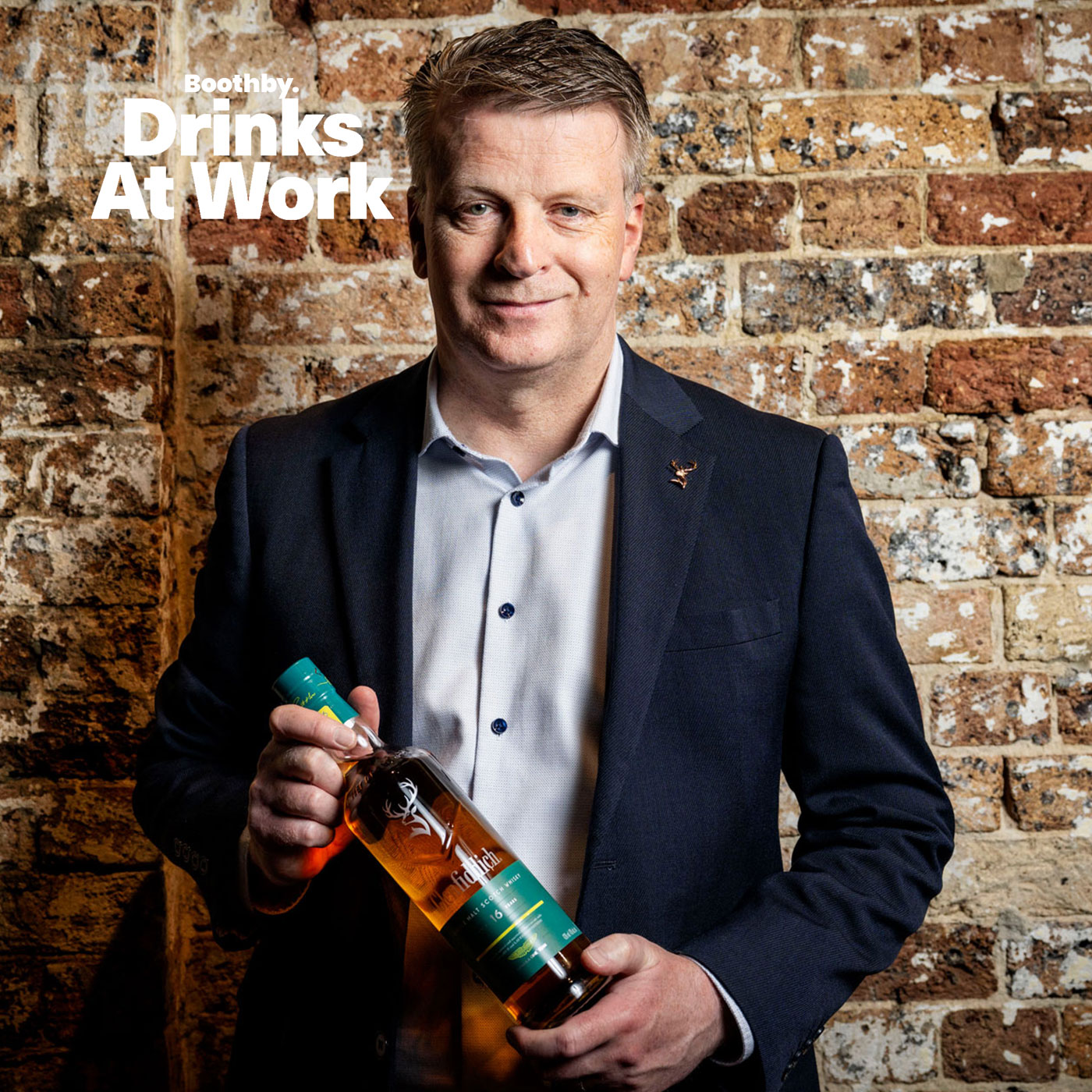
But if your passion is whisky, if you’re someone who loves to dive deep into the minutiae of how different spirits taste and are created, there might be no more appealing job than the one held by Brian Kinsman at William Grant & Sons.
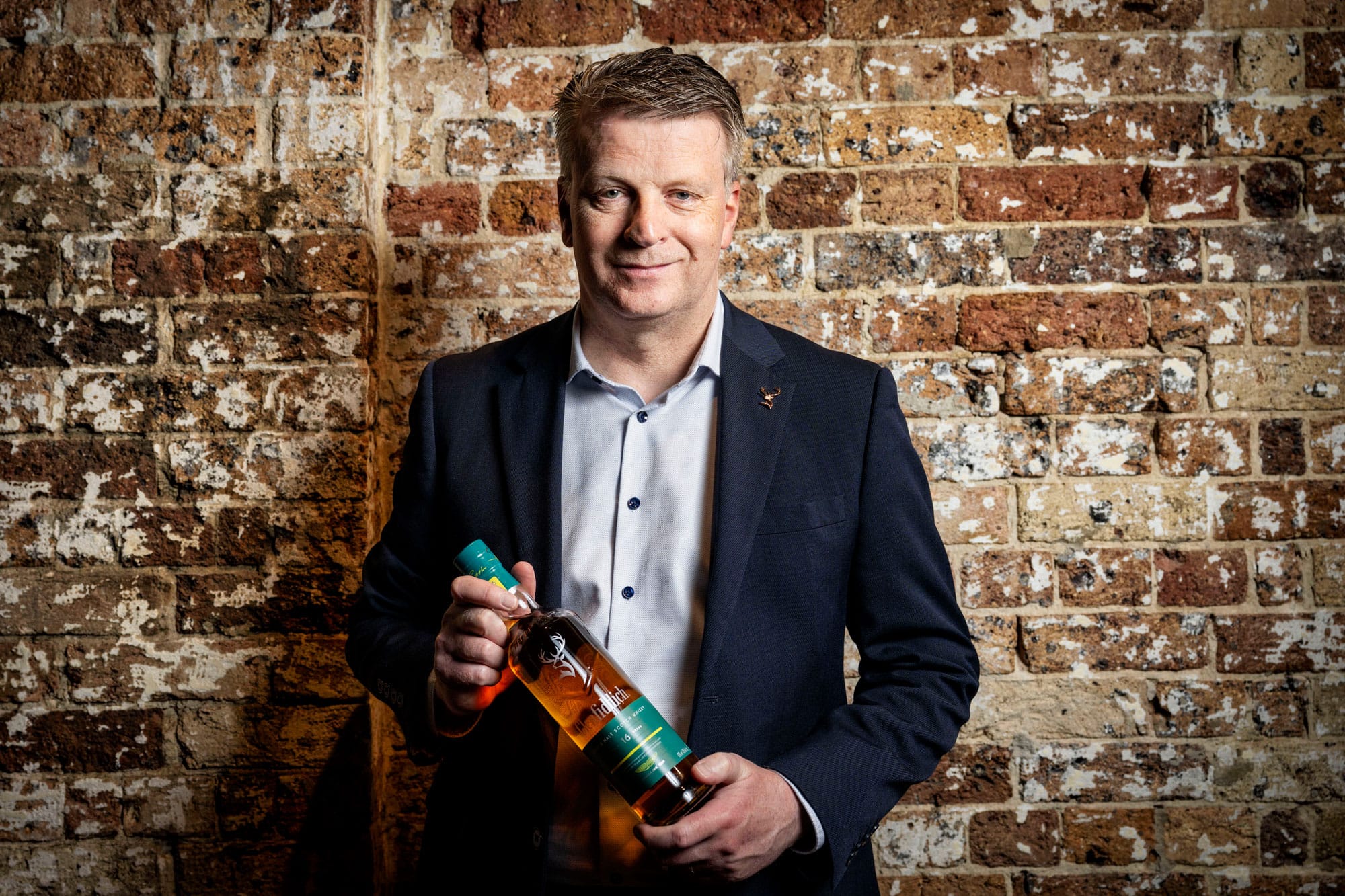
While Kinsman’s role sees him overlooking all the spirits under the William Grant & Sons portfolio in one way or another, he is best known for his role as Glenfiddich’s malt master.
It’s a job title that means he and his team are responsible for creating new bottlings for Glenfiddich, signing off on new releases and creating drams the world didn’t know they need just yet. It’s a varied role, but the key aspect — as he discuses in this interview, lightly edited and condensed for clarity — is nosing and tracking every spirit under their brand’s stewardship.
Here, he talks to us about how he got his start in the whisky business, what an ideal week in his life looks like, why the human nose can’t be beaten by AI (at least not yet), and why two of team’s favourite colleagues are dogs who do work better than even he could.
In partnership with Glenfiddich. For more information contact your William Grant & Sons representative.
SAM BYGRAVE: How do you describe your job? What’s involved in being a malt master?
BRIAN KINSMAN: Essentially, when I’m talking Glenfiddich, I’m the malt master. My proper job title, if you like, is master blender because I’m looking after all those spirits across the whole William Grant & Sons portfolio. But ’master blender,’ when talking about single malt becomes too confusing because it’s like, is it blending? Is it not blending? So it’s malt master for Glenfiddich. And basically the job is to make sure that every single bottle that goes on the shelf is of the right quality and everything that leads up to making that happen. All the way from new make right through cask selection, blending, recipes, final product. I oversee that whole process so that every time you open a bottle, you can rest assured it’s going to be exactly how we want it to be.
SAM BYGRAVE: So it’s a small job then. What does a week involve for you in this kind of job?
BRIAN KINSMAN: My ideal week would be in the office, which is just outside Glasgow, with samples arriving every day, probably somewhere in region of 200-ish samples a day, ranging from new distillate from all our distilleries, anything we’re bringing in from third parties, vatting samples, bottling samples, and really just on a daily basis seeing that end process. You can jump from single malt Scotch on the Monday, you might be looking at Canadian and Irish on the Tuesday, rums and brandies on the Wednesday. So there is diversity from a flavour perspective. That’s really good because you get a broad range and it keeps you on your toes. A simple rule of thumb, and one that we use in the office all the time is, if anybody moves spirit from one location to another location, out of a cask or into a cask, I get a sample of it, so we have that total overview of what’s going on.
SAM BYGRAVE: What happens then once you’ve had that sample, does that go into a database? You’re tracking everything, every drop of spirit that’s in the business?
BRIAN KINSMAN: Every time I get a sample, our local laboratory will get a sample. So let’s say I get a sample, the lab based at the distillery will get the same sample. They will do all the chemical analysis. They will do the sensory panel. They’ll log all their results and then totally independently, I’ll log my results. And then collectively, myself and the technical team are just monitoring all the time. Is there anything that’s coming up here that doesn’t feel right? Is there a trend that’s starting to appear in the new make? So it’s just that helicopter view, relatively in the weeds of the detail.
SAM BYGRAVE: Would you describe yourself as an organised person then?
BRIAN KINSMAN: Yes. I like lists of stuff to do. I love ticking stuff off.
SAM BYGRAVE: You can’t be a chaos agent in that kind of role. How did you get into this job? You started with William Grant & Sons in 1997?
BRIAN KINSMAN: As a chemist. I graduated from university in ’94, spent the next two and a half years working in a dental company, as a development chemist developing new dental materials. That was quite a cool job, quite enjoyed it. Every day was like going to the dentist though, because the whole factory just smelled like the dentist. Which wasn’t the best. And then I decided actually I wanted to do something else —either I want to go into whisky or go into oil. Because oil in the UK at that time was still a pretty decent industry.
SAM BYGRAVE: Whisky is forever though. Do you need to be a chemist to do this kind of role for a distillery or for a brand?
BRIAN KINSMAN: You absolutely don’t need to be a chemist. The trend has become, if I look at all the other major companies, most people in my role are now at least scientists or engineers or have that type of outlook. The previous generation definitely weren’t, so David Stewart — David started as the bookkeeper.
SAM BYGRAVE: Again, organised.
BRIAN KINSMAN: Exactly, meticulous. We’ve still got old filling books where David’s handwriting’s in there filling what was going into cask that day. The science just helps you understand, helps you have a better conversation with the distillers, a better conversation with the technical team, and backs up why we think something’s right or wrong in terms of sensory analysis. So it’s good insight, but it’s not essential.
SAM BYGRAVE: And how often are you on the road doing these kinds of trips and showcasing the liquid?
BRIAN KINSMAN: Not often at all. Maximum four weeks a year. Because we’re a small team — there’s only three of us in the blending team for the whole William Grant & Sons portfolio — so we try and minimise travel. It’s trying to do the right thing by the brand but we’ve got a huge team of brand ambassadors. We’ve got Ross Blainey here in Australia. We’ve got great people who are much, much better at this than I am in terms of coming out and talking.
SAM BYGRAVE: I was talking to Ross earlier and he was saying that when you come to one of these dinners with collectors and passionate whisky people, you’ll end up signing bottles — there’s genuine fandom around Glenfiddich.
BRIAN KINSMAN: Yes, which is nice. It’s weird. But it’s nice.
SAM BYGRAVE: I suppose you didn’t go into this to be a whisky rock star?
BRIAN KINSMAN: No, and I was chatting to the guys last night — I find it exhausting. Because I am that organised person, going to the office every day. That’s why I go to work: to make whisky. When you’re out speaking, I don’t mind doing it, I love talking about whisky. But it’s absolutely exhausting meeting people and you get to the end of the day like, I’m so drained. I could not do that day after day.
SAM BYGRAVE: Better to leave it to the likes of Ross Blainey. So you’ve been responsible for more than a few bottlings in that time. Glenfiddich Grand Cru is one of yours. It’s one of my favourite whiskies, it’s one of the ones that if I feel like I’ve done a good job that week, I will treat myself to a nip every now and then. What’s your go-to whisky, when you think you’ve deserved it?
BRIAN KINSMAN: My absolute go-to is Glenfiddich 18. I will always, always have Glenfiddich 18 in the house.
SAM BYGRAVE: That’s actually my partner’s favourite Glenfiddich.
BRIAN KINSMAN: Oh really? Good choice. It’s just one of those whiskies that, obviously I’m very intimately involved with all whiskies in the range, but Glenfiddich 18 just sits right in the middle of the pack and it’s got enough depth, enough complexity, a decent price point, everything about it says this is a classic Glenfiddich. As new ones come and go, the new one’s always your favourite. You do something new and it’s like, yeah, this is the best thing we’ve ever done. And you just get right into it. But Glenfiddich 18 is my go-to.
SAM BYGRAVE: You obviously spend a lot of time working with whisky, and I wonder — do you ever get sick of whisky? Do you ever get bored of it?
BRIAN KINSMAN: No.
SAM BYGRAVE: I thought that would be the answer. You’ve been in it for decades.
BRIAN KINSMAN: I’ve been 28 years with the company. Every day there’s something that you didn’t see coming. Because it’s probably the simplest process in the world and you’ve done so many distillery visits and every distillery visit it’s the same thing. They show you the mill, they show you the mash, they show you the fermenters and you think, well, this is just easy.
But something constantly crops up that you didn’t see. Every cask’s just gonna do something that — they’re mostly reliable — but it’ll be a surprise every once in a while.
SAM BYGRAVE: There’s a lot of talk about how making whisky is part art, part science. And I wanted to talk about that. Where does the opportunity for serendipity come in? Because you’re a real organised person, but do you ever get those chance moments that surprise you and make something new that perhaps you didn’t see coming? Does that happen? And is that frustrating as an organised guy like yourself?
BRIAN KINSMAN: No, I like a bit of thrill in my life. No, it’s good because some of it is organised surprise because we’ll deliberately, every year, go out and just try and find something new. Nobody’s asked for it. There’s no brand demand. But we’ll find some casks. Right now we’ve got some wine casks that have just arrived this week. I’ve been going back and forward deciding what we’re going to do. None of the brands are asking for them. We’ll just decide to put them somewhere, and by default they will surprise us because we don’t know what’s going to happen. We’re deliberately filling the pipeline with that stuff, that could end up in a brand.
But then beyond that, you go in and sample 100, 200 barrels and within there, something will be totally unexpected. Sometimes in an amazingly good way, and sometimes in a, oh god, that’s not great, we’re going to have to deal with that way.
SAM BYGRAVE: Can you talk through one you’ve found where it’s surprised you and it’s ended up being bottled and released?
BRIAN KINSMAN: Yes, so within the Archive collection, because I don’t know how many we’ve done — 20-ish casks? So to get to 20 casks, we will easily have sampled 400 casks. And it’s not that the other 380 were poor. You’re just looking and then you’re trying to create an interesting collection that says this is Glenfiddich in history. So within some of them, we found some absolute gems. The one for Australia, the 1990, it’s an American oak barrel. Sometimes American oak barrels, they’re so dominated by vanilla that that’s what the oak does. This one, it’s got great colour, but actually it’s got this almost fruit skin type note. So going for this key Glenfiddich character, apples, pears, it’s in there in the new make spirit, and comes through as the whisky ages. And in the 1990 casks, it’s like if you’ve got a bowl of fruit that was probably a few days beyond where you really want it and it’s starting to crinkle up, but the skins are so full of aroma. It’s got loads of that going on and then it’s waxy and a little bit mouth-coating. That’s really interesting. And there’s no way we planned that.
SAM BYGRAVE: How much of your work is using analytic instruments and how much of it is your nose as the instrument?
BRIAN KINSMAN: The simple answer is it’s all the nose.
SAM BYGRAVE: Give me the complex answer.
BRIAN KINSMAN: So the nose always wins. It doesn’t matter what’s going on, the nose wins. The analytical instruments are getting better and better. We are analysing for higher alcohols, esters. We’re looking at wood compounds. We’re tracking them all. We’re seeing that we’ve got consistency, how the casks are performing. But fundamentally, even if we did our full suite of analysis on that bottle, we may look for, I don’t know, 50, 60, 70 compounds. There will be a minimum of 2000 flavour compounds in there. So there’s a huge amount we’re not, on a chemistry level, analysing for. But our noses are doing it like that. As soon as you smell it, you’re taking those 2000 compounds and going, all right, that’s what that smells like.
SAM BYGRAVE: I read somewhere that we’re actually not really sure how the nose works. We’ve got an idea, but it could be wrong. But a dog’s nose is even better than ours and we actually don’t know how that that works. So we’re trying to make these machines that sort of pick up aroma compounds.
BRIAN KINSMAN: Yeah, and people will often say, and it’s a standard joke, but you when you do a job that involves your sense of smell, are you worried about these electronic noses? And the simple answer is no; for a start you’ve got to tell the electronic nose what to look for. And it’ll look for that thing, but it’ll miss something totally obvious. Whereas we’ve got that intuitively.
SAM BYGRAVE: Are you doing any experiments with AI to refine how these machines work?
BRIAN KINSMAN: I’m not, because I’m not technical. But as a business we absolutely are using AI a bit more and we’re aware we’ve got a lot of data. I think when you’ve got a lot of data that’s where it comes into its own.
SAM BYGRAVE: I feel like the human nose does a good enough job with whisky — and you do a great enough job — and that maybe the focus for AI research might be better used looking to solve problems like cancer instead.
BRIAN KINSMAN: It’s funny actually, you talked about dog’s noses there. So we have two dogs at the distillery, which are sensory dogs. And they’re employed to go to the places where the human nose can’t go. There’s a particular note which sometimes pops up in casks, it’s a slightly musty note, and pretty tricky to get rid of.
SAM BYGRAVE: Right, like a TCA, cork taint kind of thing?
BRIAN KINSMAN: It’s actually related to cork taint. Yeah, it’s very rare, but when it turns up it’s a proper pain. So we trained our first dog back in 2000. Unfortunately, Rocco passed away, but we then got two more dogs, we’ve got Kevin and Toby.
BRIAN KINSMAN: Kevin works at Girvan and Toby works down at the Glenfiddich and they go out every day and sniff empty casks and it’s brilliant. They can’t really nose whisky, mainly because we’re not sure what the amount of alcohol would do to them, and the dogs obviously would take in quite a lot. But they can detect empty barrels. We send Toby out with Janice, who’s the handler. He can go around maybe 1,500 barrels in half an hour. You know, up, down, up, down. And the second he gets one that’s got that note, he’s on it.
And he’s a brilliant colleague because he cheers everybody up.
SAM BYGRAVE: What in your professional opinion makes a great bar, but then perhaps more personally, what makes you happiest in a bar? I imagine you get to a few bars throughout the course of your year.
BRIAN KINSMAN: Happiest in a bar? Not too noisy. I’m getting too old. I don’t like when you’ve got to shout at somebody. So I want to have a conversation. A nice feel when you walk in, where it just feels welcoming, comfy, and the view’s a bonus.
I’m pretty easily pleased. What makes an overall best bar every time is the bartender. How are they going to engage? I don’t necessarily want a big conversation, but I want reassurance that they know what they’re doing, that they’ve got an element of knowledge, that if I need a bit of a hand on what I’m going to order, it’s going to be a genuine, authentic experience.
And you spot it straight away as soon as you start speaking to somebody you think, this person is on it. And that’s hugely important, isn’t it?


