For more information on Sunchaser, get in touch with your local Altus Brands representative, and follow Sunchaser on Instagram at @sunchaser.spirits, and Altus Brands at @altus.brands.
Sean Forsyth got his start behind the bar as a bartender, then became a brand ambassador and a passionate advocate for spirits. Today, he’s the managing director of a new Australian craft spirits brand, and it’s a long held dream come true.
That brand is Sunchaser, and it’s being produced at their Oakburn distillery in the Melbourne suburb of Brunswick, Melbourne.
“We took over a mothballed distillery,” Forsyth says in the interview below. “I’ve been given an opportunity to live a dream, which is to build and create a distillery and develop brands, which has been nothing short of challenging and exciting.”
It’s also meant the creation of two new bottlings aimed at bartenders and with cocktails squarely in mind: Sunchaser Pure Vodka, and the world-first Sunchaser Dirty Vodka.
Below, Forsyth shares his insights into why and how they developed these two new spirits, how they’re made, and what’s involved in bringing to life his dream of developing his own spirits brand.
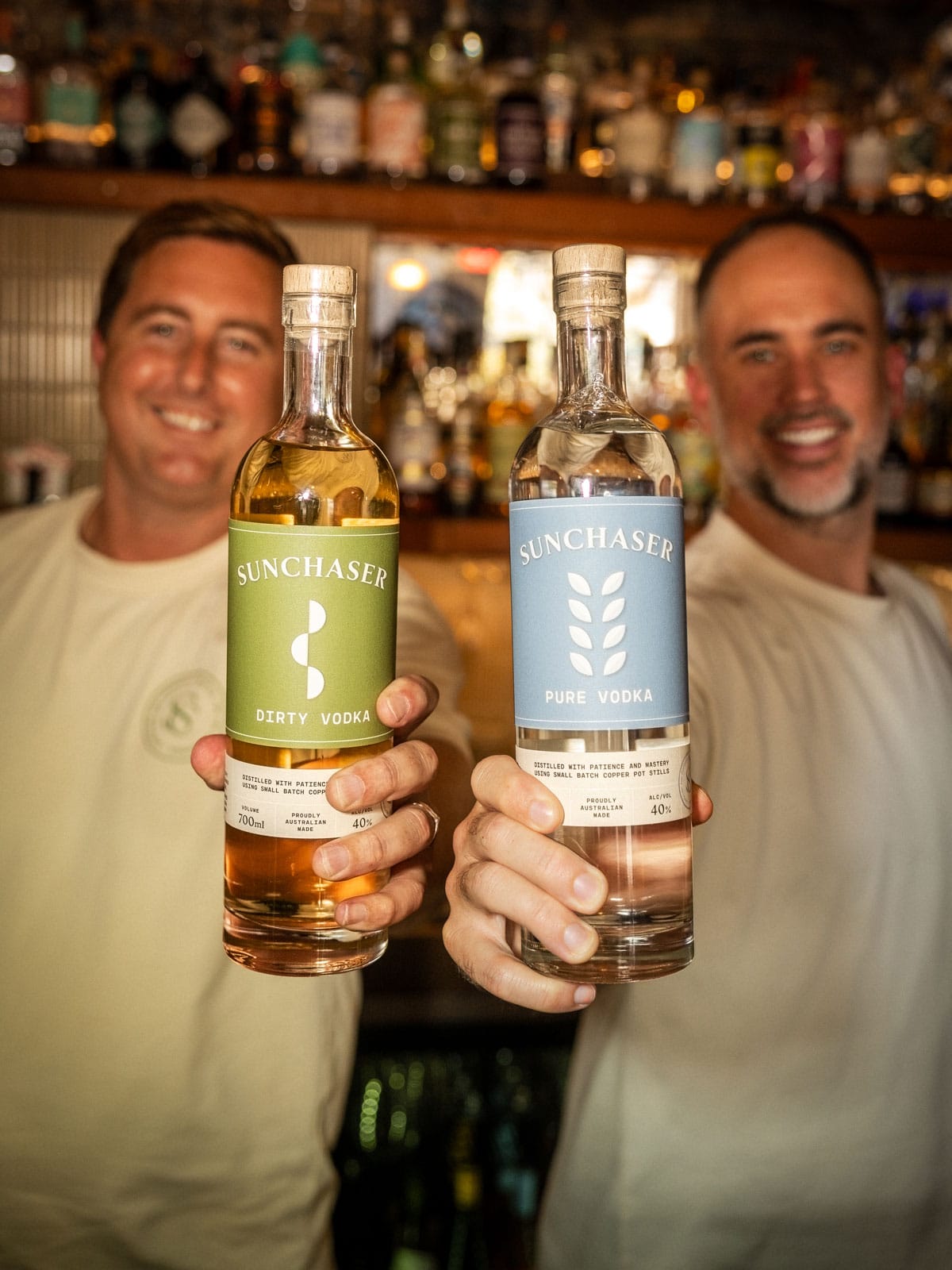
BOOTHBY: What’s your role? You’re the managing director of this new enterprise?
SEAN FORSYTH: I’m the co-founder and managing director. I’ve been given an opportunity to live a dream. After spending close to 20 years helping build and advocate for other brands across the industry, this is really the first opportunity I’ve had to create something that reflects my own philosophy around flavour, hospitality, cocktails and Australian spirits.
We took over a mothballed distillery. We’ve got a heap of whisky that’s in cask that we’re currently shaping and blending into proprietary SKUs. And we’ll launch that as Oakburn distillery and Oakburn whisky in the next couple of months.
Sunchaser, on the other hand, is like an innovation hub. We’re not beholden to any one particular category. Anything that’s unaged — white spirits, botanical spirits, liqueurs, amaro, even ready to serves — we can feed into Sunchaser. It’s [designed] to make premium, well-crafted Australian spirits, and to develop liquids and products that are either emerging trends or trends that we’re seeing are about to happen.
We launched with the Pure Vodka and Dirty Vodka based on quite a bit of data and insight. The premium vodka category is actually growing — $60 to $70 bottle of vodka is definitely growing.
BOOTHBY: Vodka is back.
SEAN FORSYTH: Exactly.
We’ve got an amazing pot still. A lot of distilleries in Australia tend to work with hybrid stills. Whereas this is more of an American-style distillery set-up with a column analyser and a pot still or thumper. Having a two thousand litre copper pot still with a short swan neck creates this amazing copper contact and a lot of reflux through the distillation process, which creates a lot of texture and lot of minerality through pure distillation, with no additives or glycerin, and by taking a significant heads and tails cut. It makes a world-class Australian wheated vodka.
We’re not trying to be cheap. We want to be recognised and recommended by bartenders — if you’re wanting a great vodka Martini, Sunchaser Pure Vodka is a perfect back bar option and upsell opportunity for you.
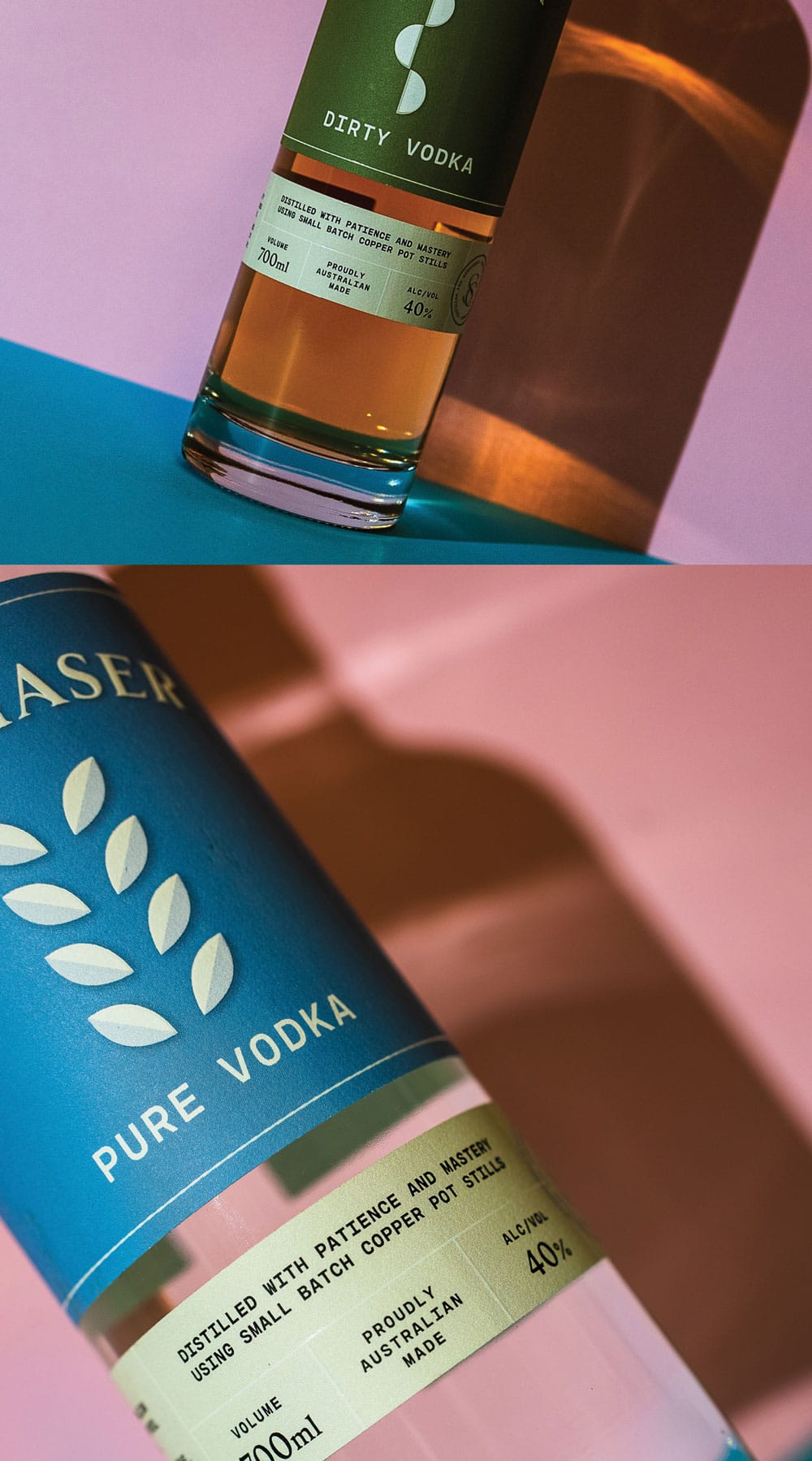
BOOTHBY: Where is the distillery and how did that come about? What was it before?
SEAN FORSYTH: It’s the original The Gospel distillery. It’s Albert Street in Brunswick — it’s awesome. It’s basically just a big production facility. There’s no cellar door. It’s filled with whisky barrels, and a pretty significant and serious distilling floor. It’s a grain on grain distillery — it’s got its own grain mills, wash tanks. We’ve got forty thousand litres of fermentation tank capacity. It’s legit.
BOOTHBY: And how did you come to be involved in it?
SEAN FORSYTH: This is owned by the Paramount Liquor business and the Rowe family. This is just another adventure with the Paramount business for me, but certainly more towards something I’ve always had a passionate dream to do.
BOOTHBY: What’s the feeling like? You’ve come from the bartending world, sold a lot of famous brands, advocated for a lot of famous brands, and now you’re doing this.
SEAN FORSYTH: It’s really surreal. It’s really interesting because when we took this space over, it was a mothballed distillery. There’s 60 different batches of whisky we had to understand and uncover. We had a fully decommissioned distillery that needed to be engineered and recommissioned. We had no inkling or ideas of products or brands or anything like that.
BOOTHBY: So it was almost like a blank canvas in a way.
SEAN FORSYTH: Yeah. What became really meaningful for us was the idea of taking over a dormant distillery, uncovering old whisky stocks and effectively giving forgotten whisky a second life. We’re also able to bring an eight year old straight rye to the market. It’s unbelievable. It’s a phenomenal straight rye that you would put up against some of the best in the world.
BOOTHBY: It sounds very exciting. It also sounds like a lot of work.
SEAN FORSYTH: A lot of work. Because you’re developing products, you’re developing production, you’re developing brands, you’re developing commercial strategy, you’re looking at data and insights to see where the trends are going and how and where you’re going to position the brand. There hasn’t been much of a dull moment. I think having experience across bartending, advocacy, commercial, distribution and now production has probably shaped the way we approach product development, we’re building liquids with genuine bartender and venue relevance.
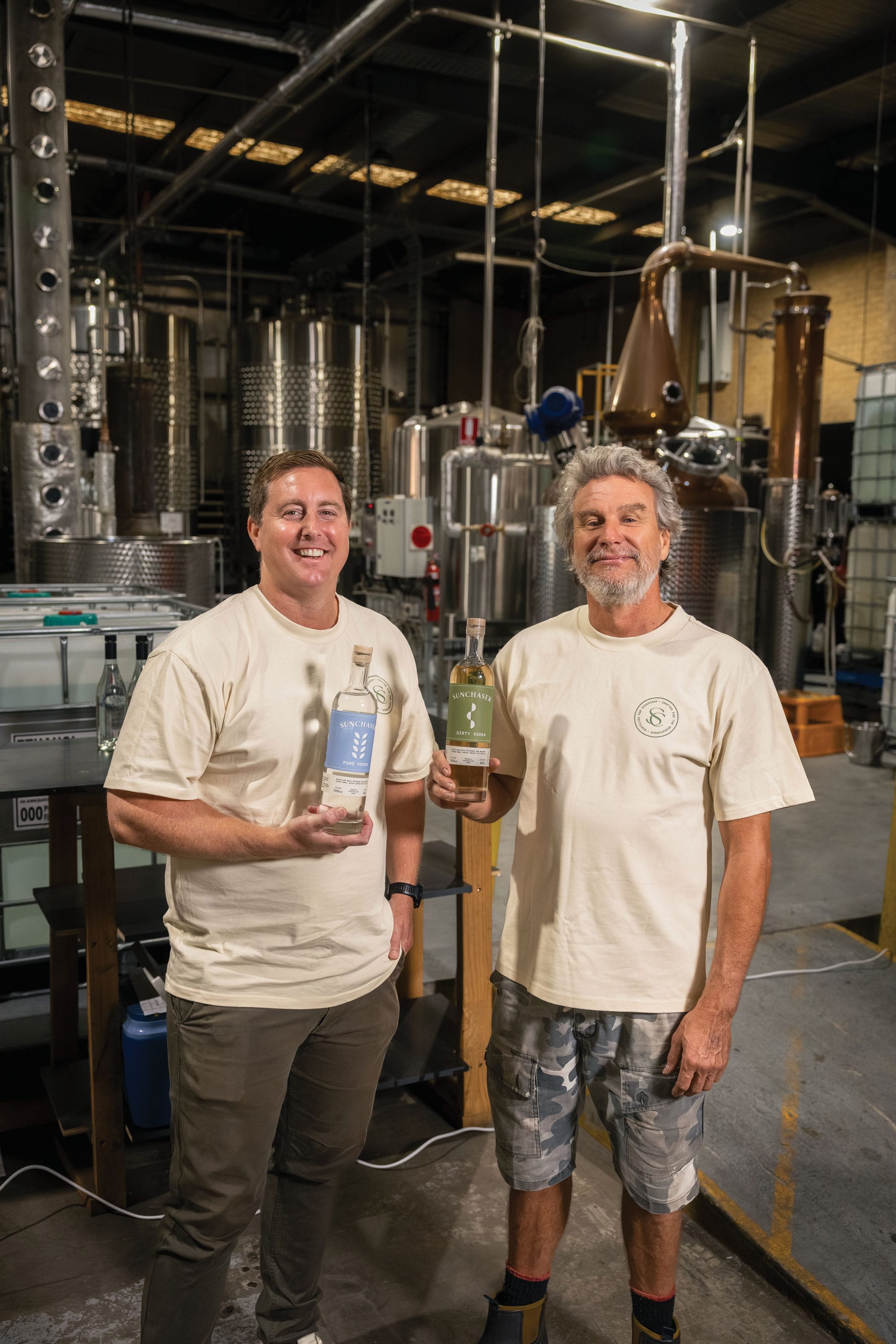
BOOTHBY: Let’s talk about Sunchaser Pure Vodka again. Is this a cocktail pour that you’re looking for?
SEAN FORSYTH: We definitely are targeting premium restaurants and bars that are looking for a quality Australian craft premium pour. And we can be as competitively priced as Ketel One. We know there are some operators out there who are wanting to pour a credible pouring vodka — we feel we can offer something compelling there that is also Australian craft.
We’re also going to roll out vodka category training as well. Jared Plummer’s helping us pull it all together. We really feel there is an opportunity to help develop bartender knowledge and advocacy around the vodka category.
BOOTHBY: Can you walk us through the production process for the vodka?
SEAN FORSYTH: We did a heap of R&D on raw materials and ethanol for production for vodka. And we landed with Ketel One’s production philosophy. We felt we could do a really good job there. It’s really difficult and not very cost effective to produce a vodka from grain. To make a really good vodka, you need sophisticated column distillations. You need to be working with a spirit that is plus 90 percent ABV and that’s really difficult to achieve in commercial quantities using grain on grain and pot distillation.
There are four different ethanol products that Australian distillers can get their hands on to make liqueurs and gins and spirits. Sugarcane from Wilmar, which is the old CSR, is a really good cane ethanol product. You’ve got a grape ethanol, which is coming from South Australia and also from Hunter, from Tarac. You’ve got some whey ethanol, from New Zealand, which is a really high quality.
And then you’ve got wheat spirit, which is coming from Manildra. We landed on wheat and Manildra for a couple of reasons. One, the quality of that Manildra product is amazing. They actually give you a certificate of analysis to say that it’s gluten free. So we can literally call out that it’s a wheat vodka that’s gluten free because we don’t add anything to the distillate afterwards. It’s made from high quality, GMO-free wheat. And one element of Sunchaser, the branding, has been inspired by the wheat strain that is primarily used in ethanol production for Australia, which is actually called Sunchaser.
BOOTHBY: And then that goes through the pot still — how many times do you do that?
SEAN FORSYTH: It’s only once. It’s a pretty simple recipe. We do a full two thousand litre charge with water and the ethanol. But what we do that is different is that we take a significant heads and tails cut. It’s about 30 percent that we discard. And as far as I’m aware, that seems to be the biggest heads and tails cut in vodka production for any vodka brand in the world.
What we’re doing is more focused around mouthfeel and texture. And with removing the heads and tails, removing those citrus aromatics, it again creates this really rich, creamy texture and mouthfeel.
BOOTHBY: And is that what helps it stand up in a Martini? A Martini is so much about texture.
SEAN FORSYTH: It’s unbelievable. It’s honestly one of the best vodka Martinis.
After the cut it comes off the stills at around 80 percent ABV, and then we blend it back to 40 percent ABV with spring water. We landed on that ABV because, again, that is the best ABV to drive texture and character.
We hand bottle on site. We hand-fill, we hand label, and then hand box. And that’s a really important part. There are about 30 different quality control points for our production.
BOOTHBY: How do you make the Sunchaser Dirty Vodka?
SEAN FORSYTH: It was one of those things that could have taken years to get right. We knew pretty quickly we were onto something because the salinity and texture completely transformed classic vodka cocktails. It’s a combination of our Pure Vodka and olive distillate, and then Crawley’s Olive Brine.
We take olives from South Australia, we distill in Manildra, we take a distillate that’s about 80 percent ABV. We blend that with our Pure Vodka distillate at 80 percent ABV. We then add Crawley’s Olive Brine and we allow that all to marinate for two to three weeks. And then we again, bottle down to 40 percent ABV using spring water.
BOOTHBY: What’s the idea behind it?
SEAN FORSYTH: I started to really see this movement towards savoury and umami. Certainly the rise of the Dirty Martini in terms of its prevalence within the on-premise. Also, the Dirty Martini moved up significantly in Google search trends over the last 18 months in Australia.
You can literally take any contemporary classic vodka cocktail, and replace it with the Dirty Vodka, and it tastes delicious. Be it a Dirty Mule or a Dirty Cosmo — we actually thought that it could break some drinks and make them taste horrible. The Cosmo is a really good example. When we had one made for us at a bar, I’m thinking, this will be horrible. But instead it was wow, this is delicious. It’s just made a Cosmo better. It’s that savoury salinity that really drives it, but also the minerality and texture from our Pure Vodka that gives it a lot of weight and mouthfeel.
BOOTHBY: Are there any particular drinks you think suit the Dirty Vodka best?
SEAN FORSYTH: There are four drinks we’re really focused on. The first one is obviously a Dirty Martini — have it with dry fino sherry. Then there’s the Dirty Spritz — it’s very moreish, really refreshing — four parts sparkling water, one part Dirty Vodka, and a splash of dry white wine. Easy to replicate.
And then there’s a Dirty Paloma, and a dirty Bloody Mary. Delicious.
Tasting Notes
Sunchaser Pure Vodka
What we say: The Pure Vodka presents quite neutral on the nose, with a medium bodied palate that has a lick of spice as it goes down, with a faint hint of lemon on a long finish; handy in a Martini.
Sunchaser Dirty Vodka
What we say: Distinctly olive on the nose, a touch of vanilla and black olive, a medium-full bodied palate with saline on entry, well-integrated with the spirit, and well balanced; the finish is long and lingering, with a pleasant citrus and olive character, and just the faintest touch of olive bitterness at the end. Delicious on its own.
For more information on Sunchaser, get in touch with your local Altus Brands representative, and follow Sunchaser on Instagram at @sunchaser.spirits, and Altus Brands at @altus.brands.
For more information on Sunchaser, get in touch with your local Altus Brands representative, and follow Sunchaser on Instagram at @sunchaser.spirits, and Altus Brands at @altus.brands.

![Never Never's Sean Baxter, Chris [tk] from Bar Leone, and Latteria's Luca Baioni. Photo: Riley Williams/Supplied](https://storage.ghost.io/c/16/ea/16ea42af-bd14-44b7-b952-dde2e51da580/content/images/size/w960/format/webp/2026/06/CCG-launch--Sean--Chris--Luca-with-bottle-1.jpg)