Welcome back to the Melbourne briefing, with a chat to the co-owner of Asia’s number one bar, at their guest shift in Melbourne last week.
In this briefing:
- Asia’s best bar just popped up in Melbourne;
- The anxiety that now comes with being the best bar in Asia;
- Why 2,000 bars opened in a single Chinese city in one year;
- Why guest shifts matter to Three Horses co-owner Rob Libecans;
- Bastien Ciocca’s Spicy Watermelon Tequila Sour recipe.
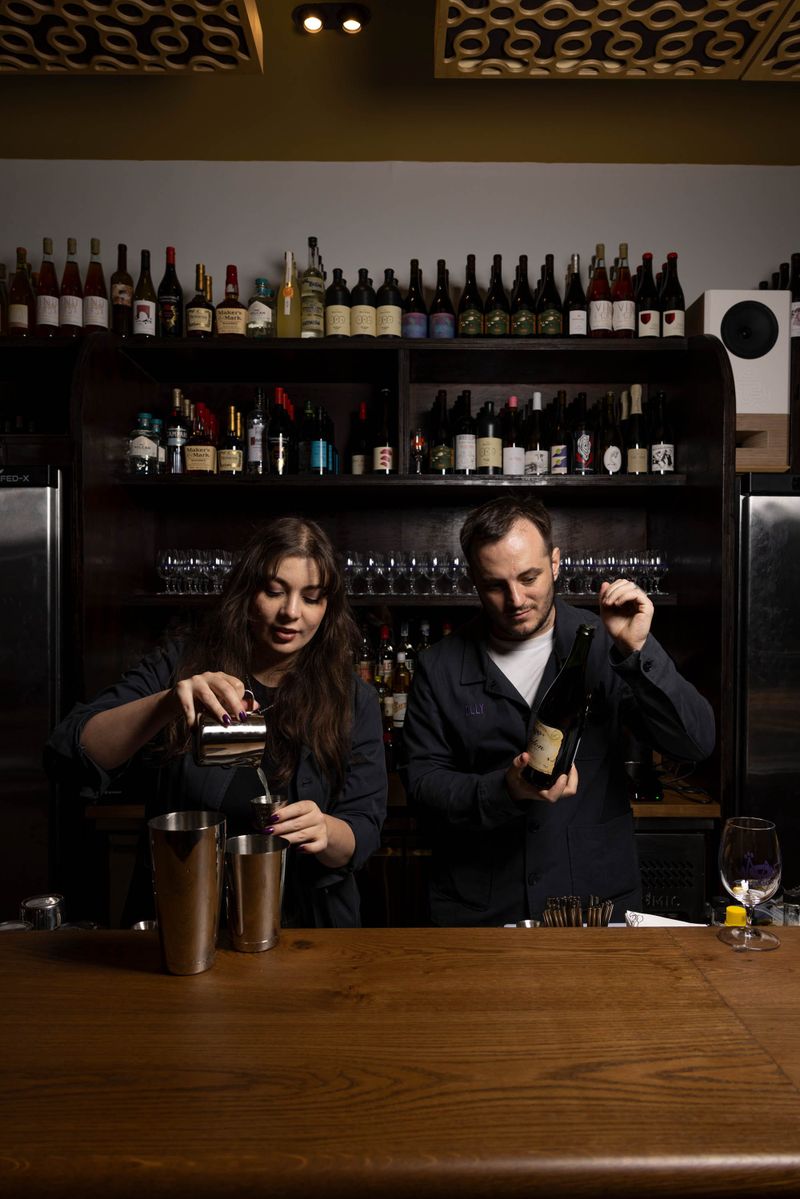
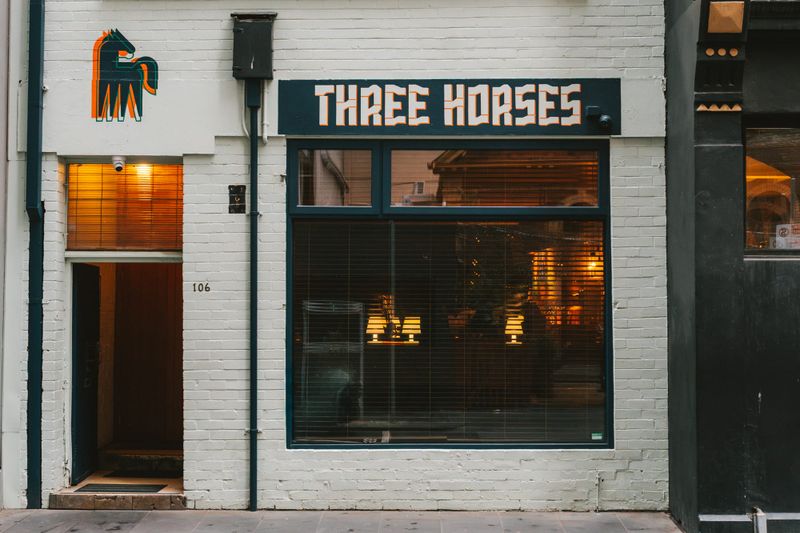
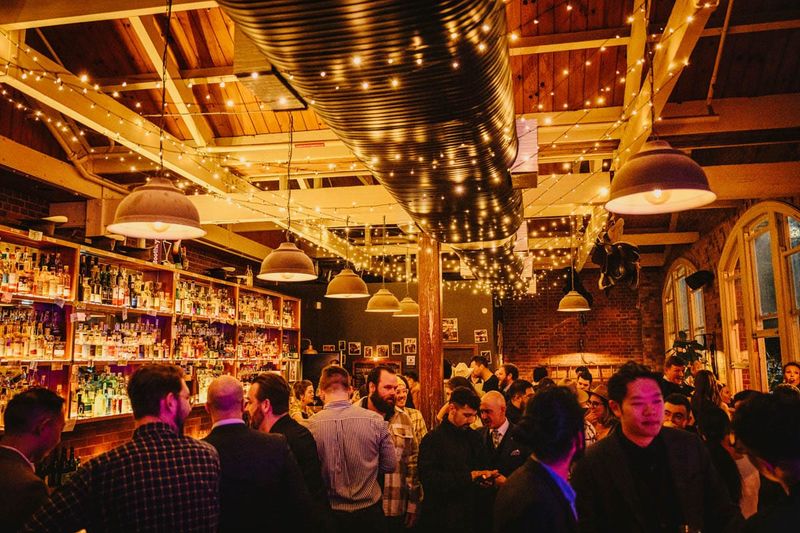
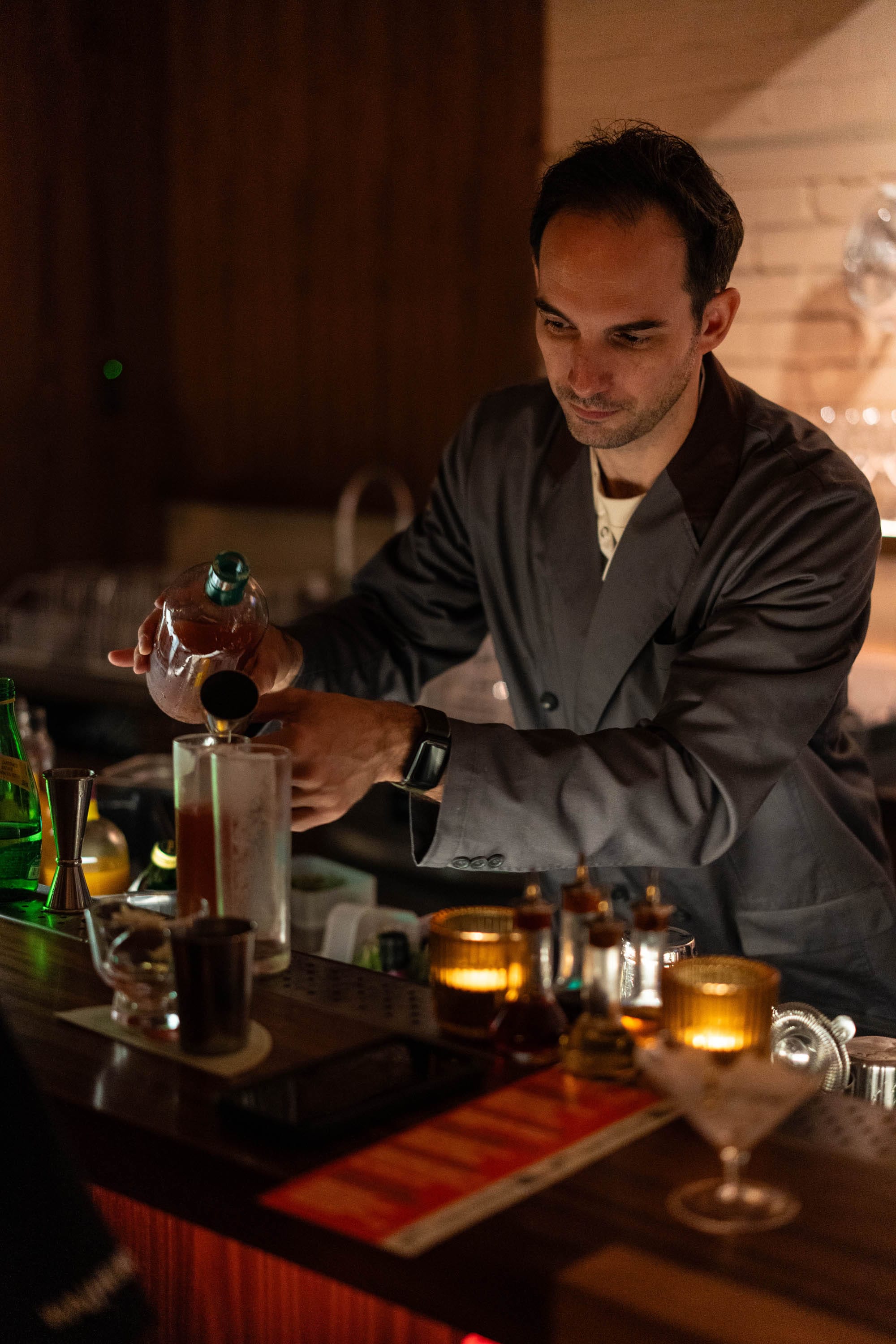
Last week Bastien Ciocca, one of the founders of Hope & Sesame in Guangzhou, China, popped down to Melbourne to host a masterclass and guest shift at Three Horses. His bar recently scored the coveted top spot on the 2026 Asia’s 50 Best Bars list, announced last month in Macao, and Bastien was kind enough to sit down with me for a brief chat last week at Three Horses ahead of his masterclass.
FRED SIGGINS: First of all, congratulations — I think the obvious question is, how does it feel to be named the number one bar in Asia?
BASTIEN CIOCCA: Very weird, you don’t expect it. You might think, ‘we’re going to make some noise this year, we’re going to have a chance,’ but then they do the ranking, they read the top four, top three, and hearing the names of these incredible bars, it suddenly feels way beyond reach. Then when you hear them say your name, there’s a feeling of relief and calm, but that’s quickly replaced with a feeling of anxiety. Now we have to go back and explain to the team what this means and the responsibility behind it. It’s a little bit overwhelming.
FRED SIGGINS: Can you tell me a little about the Hope & Sesame approach to cocktail creation?
BASTIEN CIOCCA: We have three different brands of bars, DSK Cocktail Club, Hope & Sesame, and Sanyo. DSK is the most easy to understand, where the drinks are all easy to recognise. Hope & Sesame is very creative in terms of the ingredients and techniques that people might not be used to, but the drinks always connect back to a classic or a family of classics like a Gimlet or a Manhattan. At Sanyo, we use 100 percent Chinese ingredients, including all the spirits, and it doesn't have to relate to traditional styles of cocktails. Like there’s a traditional soup of green chilli and garlic, so we might try to use that as inspiration for a drink.
At Hope, we try to be very creative, but the drink still has to be fundamentally delicious, whereas at Sanyo we’re happy to really push people. It works because a group of people will come in, order five different cocktails and share them all, so you don’t have to love every drink, you’re having a whole experience.
FRED SIGGINS: So what you’re doing at Sanyo really fits in with that Chinese dining culture of ordering a lot of dishes and sharing them all.
BASTIEN CIOCCA: Yes, exactly.
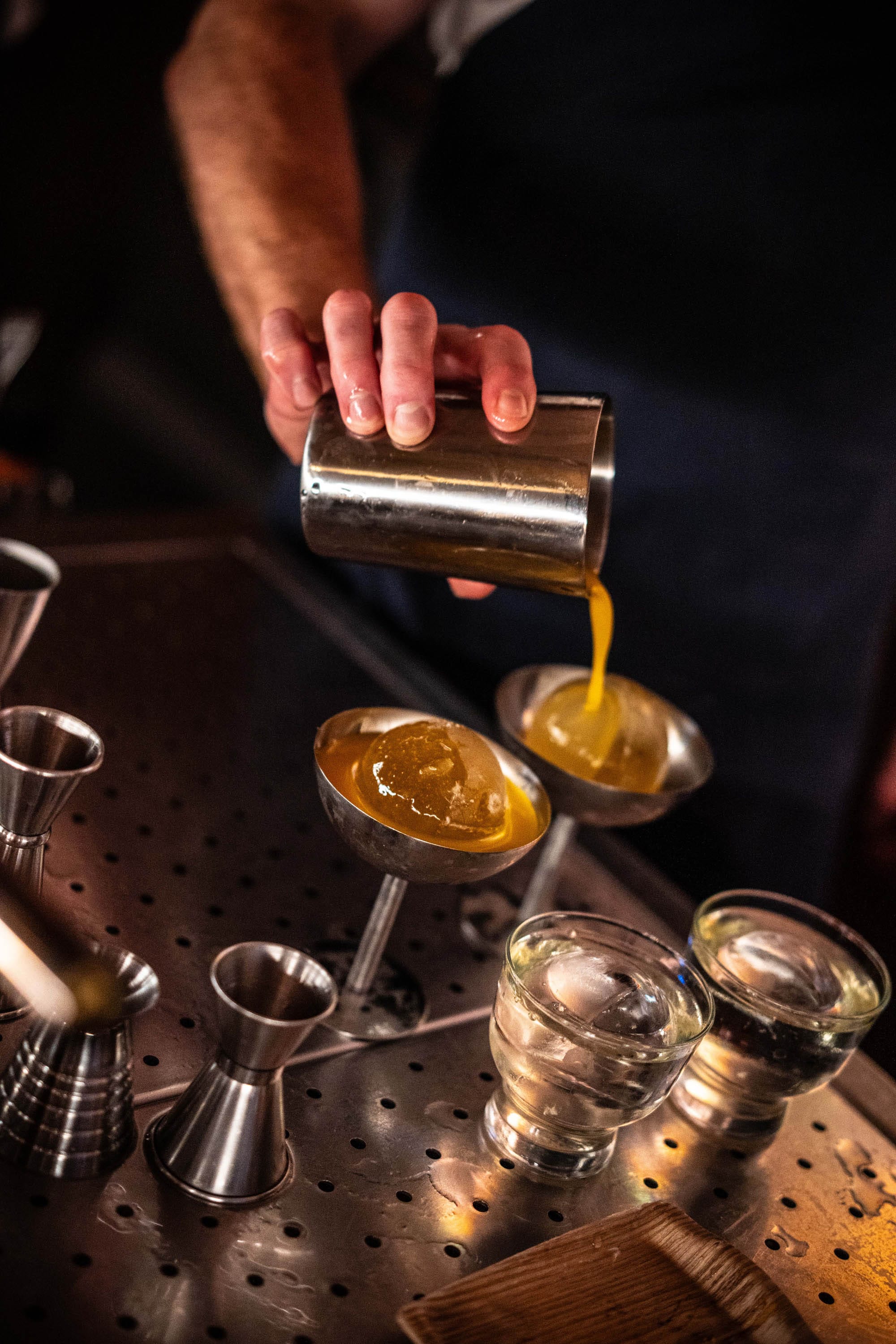
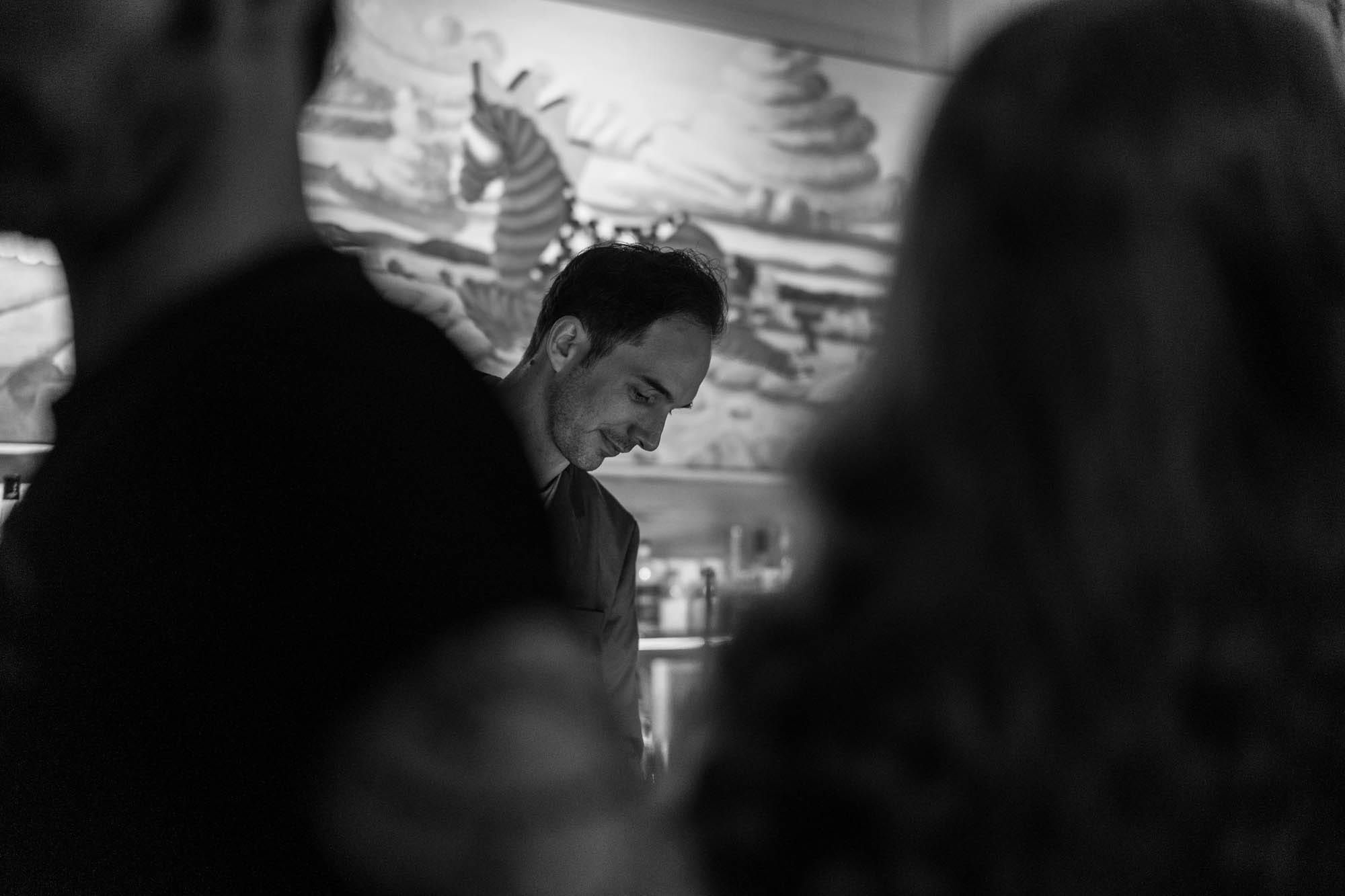
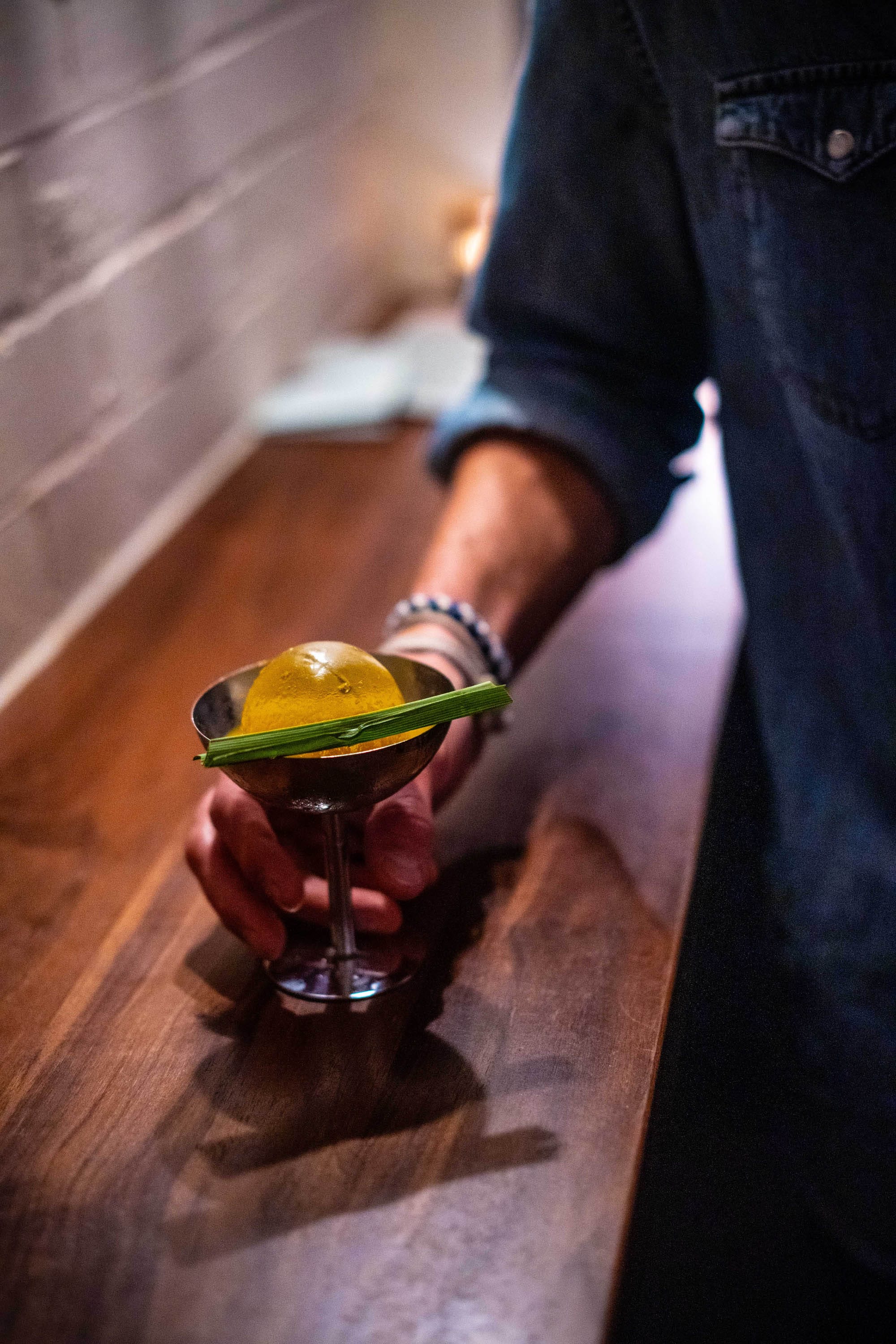
Photos: Fred Siggins
FRED SIGGINS: And are there any particular techniques you tend to rely on?
BASTIEN CIOCCA: At Hope there are a lot of processes that go into drinks prep, but we try not to emphasise that when we talk about our cocktails. We don’t want it to sound overwhelming for people.
It would be weird if a chef came to your table and tried to explain every step of how they made a sauce. But if you want to know, we can take you into the lab and show you everything. A lot of cooking happens. We might roast a herb for example, then let it macerate to extract the flavour in a different way. We’re also lucky because equipment is very inexpensive in China, so we can have a lot of fun toys like rotovaps and centrifuges that aren’t affordable elsewhere.
FRED SIGGINS: How would you describe the Cantonese approach to flavour, and how does that show up in the cocktails at Hope & Sesame?
BASTIEN CIOCCA: Our current menu is very much inspired by Cantonese food culture. There’s a common saying in Cantonese that goes something like, “you have to work very hard for a long time, the process is bitter, but suddenly it turns sweet.” It basically means that one day you will enjoy the fruits of your hard work. We wanted to say something about being open for 10 years, so we’ve called this menu Bittersweet.
Cantonese people love bitter flavours, and once your tastebuds are trained, you learn to love it. Cantonese food is all about freshness, the tastes have to be clean, and cocktails have to have very direct flavours. So if we say it has peach, it has to taste like peach. It’s part of the reason we use a lot of Boiron purees, because they have that strong, direct flavour.
FRED SIGGINS: What’s your favourite drink from your current cocktail list?
BASTIEN CIOCCA: One drink I love is called the Spicy Not Spicy. It’s made on a base of Boiron passionfruit, then we take this yellow chili from Hainan, which is one of the spiciest chilis in the world, and we distill it to remove the capsaicin but it retains all the aroma. So the smell is crazy scary, so we watch people having a sip and waiting for that kick, but it never comes.
FRED SIGGINS: That’s so fun. I love the idea of almost tricking someone’s senses to create a really engaging drinking experience.
China seems to be really charging ahead in terms of cocktail culture in 2026. What are the trends you see emerging?
BASTIEN CIOCCA: Over the last 10 years we’ve seen such a drastic change. There’s been an absolute explosion in the bar scene. In 2022 we were doing a consulting gig and in that one city 2,000 new bars opened that year.
FRED SIGGINS: You what now? 2000 new bars in one city in one year?
BASTIEN CIOCCA: Yeah, it’s crazy. But a lot of those bars are very small, opened by a bartender who’s come from Shanghai and has come back to their hometown to open something small, maybe just by themselves or with one friend behind the bar. And there’s so much creativity. By being in a totally different social media environment, the inspiration is coming from different sources than what you see outside of China. And bars are really trendy with young Chinese people right now. Big fashion brands, if they do a product launch or an event, they don’t hire DJs, they hire bartenders and put them in the centre of the room.
FRED SIGGINS: And what’s your impression of the cocktail scene here in Melbourne?
BASTIEN CIOCCA: In one word, Melbourne is cool. The drinks are very good, there’s a lot of interesting flavours, a lot of intention and authenticity in the way things are done. In China venues can sometimes feel a little contrived. [My business partner] Andrew Ho loves it here, too. He loves Melbourne so much he decided to have his wedding in the Yarra Valley.
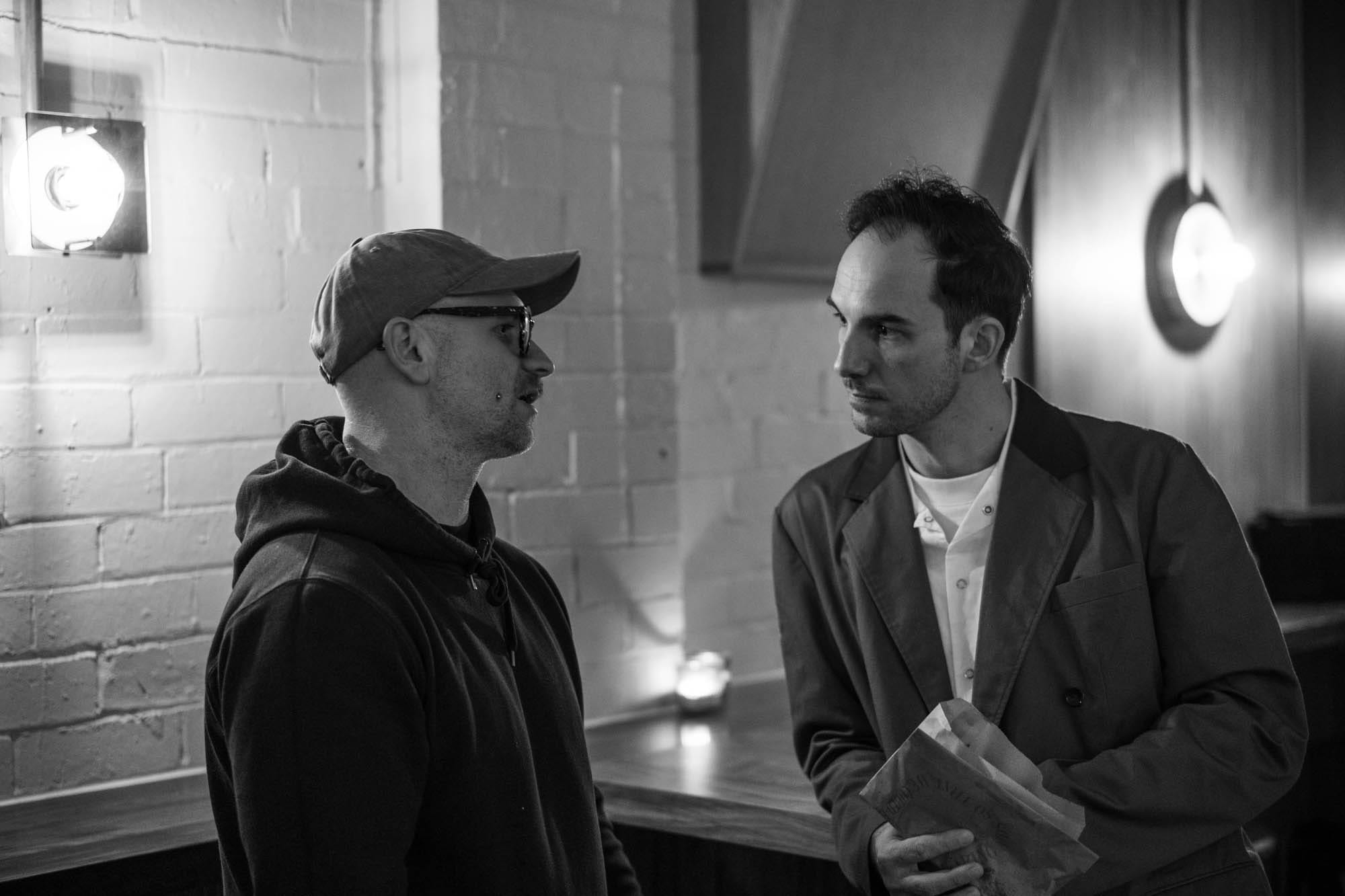
There you have it: the Melbourne bar scene, and our local wine regions, get the tick of approval from Asia’s number one bar.
I also asked Rob Libecans, co-owner of not just Three Horses but also Caretaker’s Cottage (itself a feature of the World’s 50 Best Bars) why he hosts takeovers like this one.
“We’ve always wanted to host international guests like Bastien,” Rob says, “but the size and shape of Caretaker’s has been our biggest restriction on doing more educational events. Caretaker’s just settled perfectly into being a place for hosting parties, but since we’ve opened Three Horses, it’s really opened the gate for being able to offer a lot more in terms of sharing ideas.”
“With age also comes a bit of responsibility,” Rob continues. “It’s up to people like us, small business owners, to really champion education for our hospitality community, for our staff, and also for ourselves, so it’s a pleasure to be able to put things like this on.”
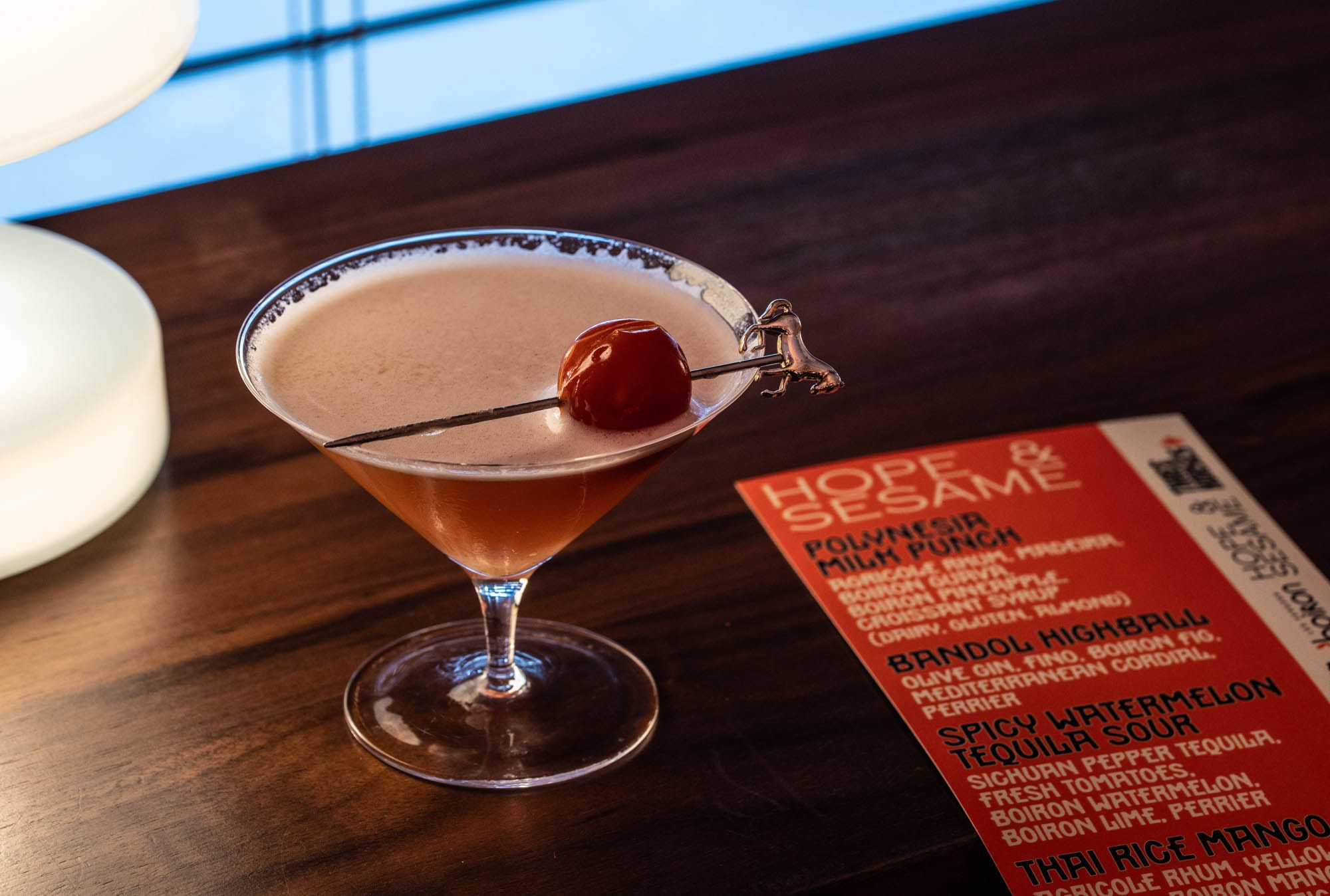
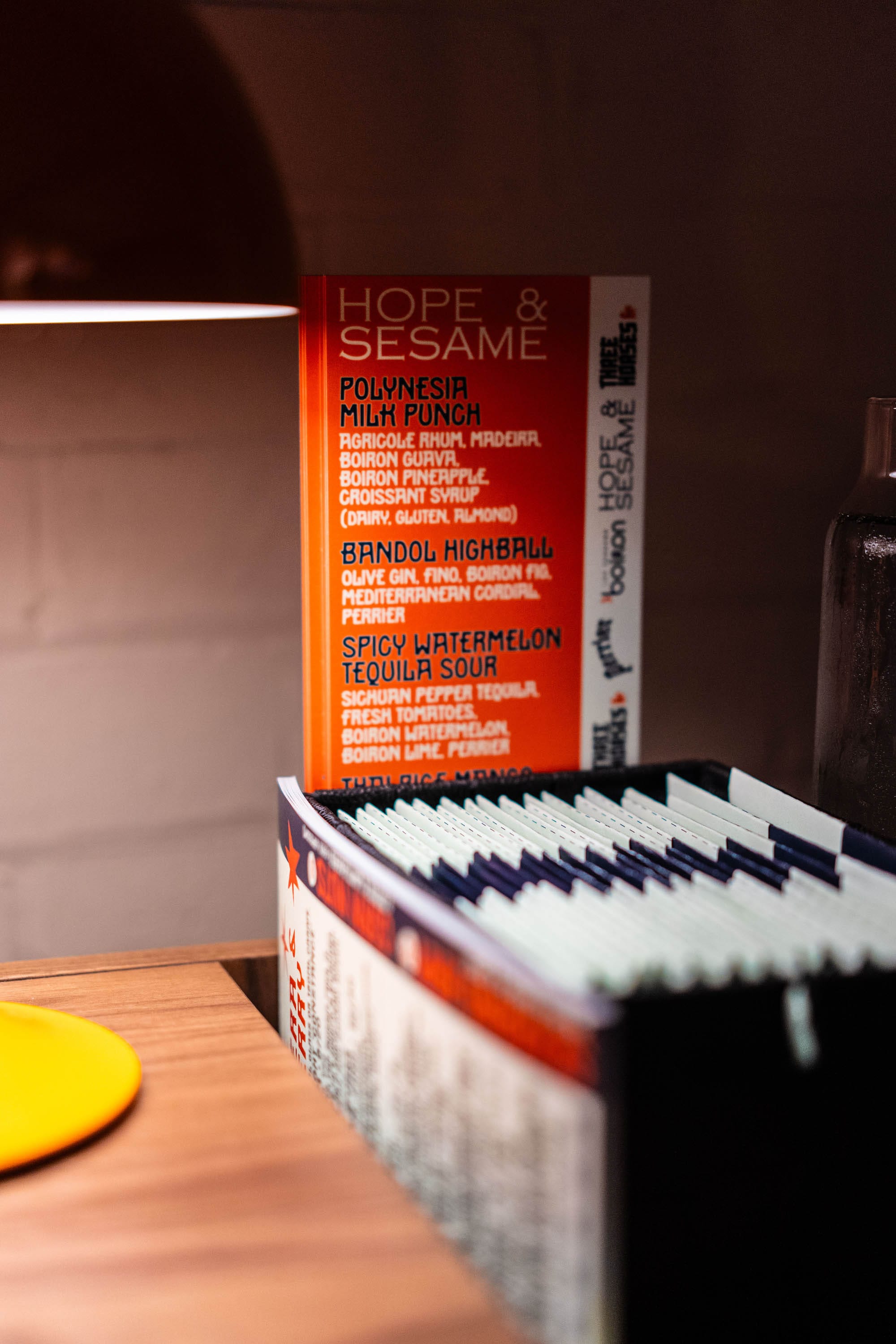
Spicy Watermelon Tequila Sour
- 40ml sichuan peppercorn-infused tequila*
- 20ml watermelon puree
- 15ml lime juice
- 15ml fresh tomato
- foamer or egg white
- 20ml sparkling mineral water
Shake all ingredients except the mineral water and fine strain into a chilled coupe. Top with sparkling mineral water and garnish with a pickled cherry tomato.**
*For the Sichuan peppercorn-infused tequila:
To a 1 litre blanco tequila, add 10gm sichuan peppercorns, lightly crushed. Let infuse in a glass jar for 2 hours at room temp, then strain through a coffee filter.
**For the pickled cherry tomatoes:
Add 180ml white vinegar, 180ml water, 15gm sugar, and 6gm fine table salt to a pan and bring to a boil, then remove from heat.
Add 400gm whole cherry tomatoes, pricked with a toothpick, into a clean glass jar with two cloves of garlic and a few sprigs of fresh dill. Pour hot brine over tomatoes, seal and refrigerate for at least 24 hours.