In this issue:
- the big — and beautiful — idea behind Jigger & Pony’s Bloom menu;
- why a menu with all new drinks isn’t always what you want;
- champagne content!
- The Last Word — fried chicken and caviar? Yes, please.
Welcome back to Boothby’s Singapore briefing, where this week we’re going deep on the latest bookazine-style menu from Jigger & Pony.
The annual release of Jigger & Pony’s menu is always something to look out for, and back in May I sat down with operations manager Martin Villareal to talk about how they think about the menu, the concept behind it, and how they develop each new menu.
I think the interesting thing about the Jigger & Pony menu is just how few drinks are new on the list. Martin tells me there were nine new drinks on there this year, which means that the other spots on the list are for tried and true favourites, the kind of drinks which — like the Yuzu Whiskey Sour — have become signatures of the bar, and which guests return to again and again.
That chimes with something that Native’s Vijay Mudaliar told me a few weeks back, about how guests are looking for comfort. They’re returning to the OG cocktail bars, he said, because with the price of drinks only going up, getting a cocktail from a new bar can be something of a gamble.
It’s true too in Sydney. When I spoke to Michael Chiem of the long-running PS40, he also spoke about how they don’t put too many new drinks on these days. Instead, it’s about the drinks people love staying on the list, even if that means they don’t have a new menu drop to tease on Instagram or to send out as a press release.
Who knew that giving your guests what they want would work, right?
Okay, let’s get into it.
The List: Jigger & Pony’s Bloom menu
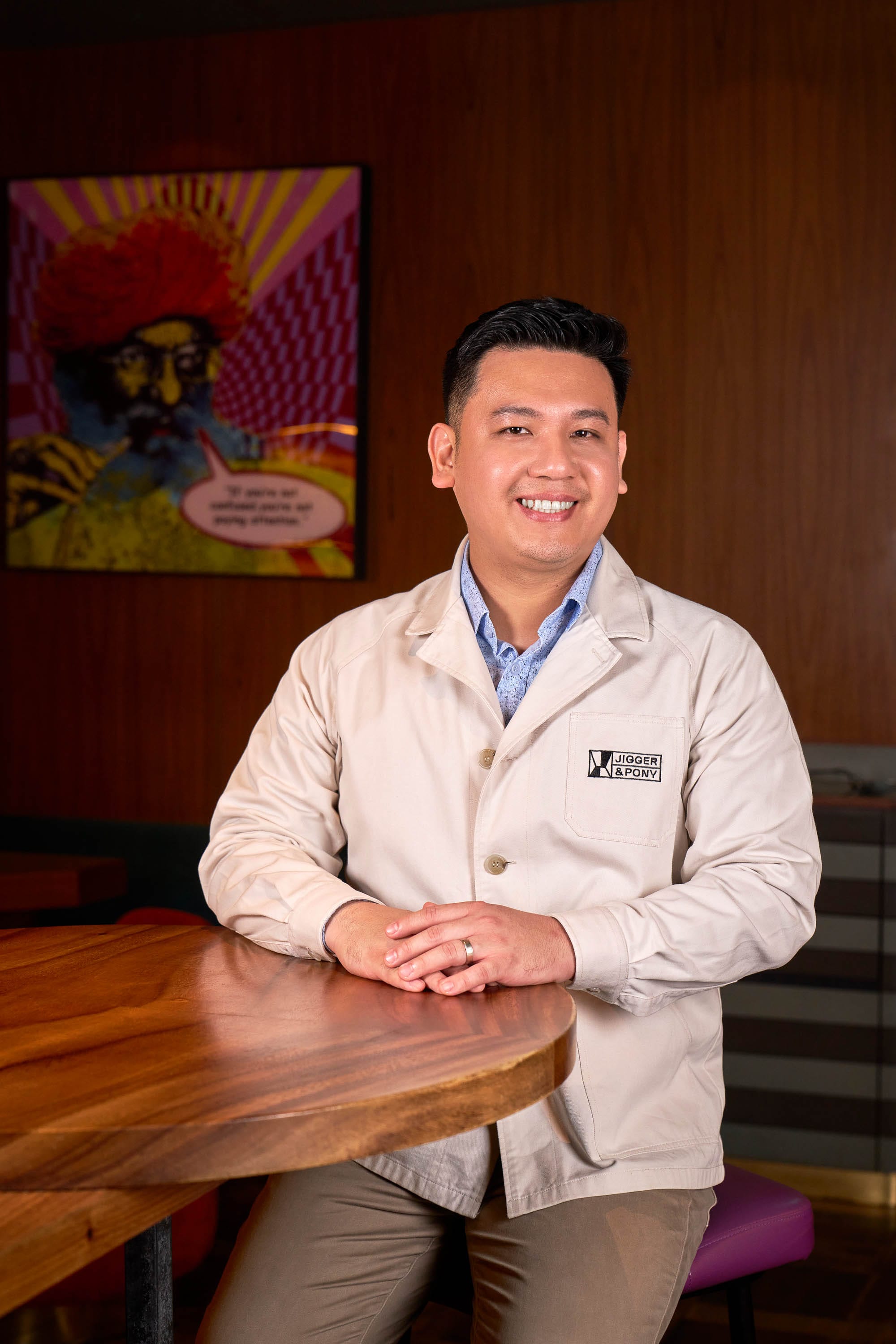
Martin Villareal is the operations manager of Jigger & Pony, and led the implementation of their latest menu release. With once a year drops of their menu, which comes in a bookazine format, there is a lot of work that goes into it. We stopped by the bar to ask Martin how it all came together.
BOOTHBY: Jigger & Pony has released its latest menu, which is always an event. This one is called Bloom. What’s the idea behind it?
MARTIN VILLAREAL: This is the eighth edition, actually. Yeah. Last year’s menu was called Embrace — we wanted to showcase to the world that, even when life isn’t quite full of lemons, you learn to embrace it. And that naturally brings us to Bloom. We reflected quite a bit when we were launching this menu, in terms of where we are, both as a team and in our place around the world. Bloom is about optimism, growth, resilience, and the process of becoming. If you imagine a flower blooming, it’s easy to just focus on the final stage. But for us, what interests us is actually the whole process and journey that takes place before that.
The main message of our menu is that even through uncertainty, there is always a space for hope and progress.
BOOTHBY: That’s a really nice message. But it’s quite a high concept kind of idea. How did you arrive at that?
MARTIN VILLAREAL: When we create menus at Jigger & Pony, we actually work backwards. I used to work in a different place and most of the time it’s like, okay, let’s make drinks and then after that we’ll find a theme for those drinks, right? But for us, how we do it is we come up with a message and story and then from there we build the drinks that we want to showcase creatively, but also drinks that we know would resonate and that our guests would like. So how it worked is, like I said, we look back into who we are and where we are as a team. And our team is blooming. As a team we’re constantly growing and having new energy and a new generation joining us.
BOOTHBY: How many new drinks are on there? Do you throw the whole thing out and start again?
MARTIN VILLAREAL: We don’t really do drastic changes when we change our menu. We look at data when we create menus as well. You don’t want to be shooting yourself in the foot. For example, the Yuzu Whiskey Sour has been on our menu for more than a decade. It sells even today. It’s Jigger & Pony’s modern classic now. And whether people come here for the first time or the hundredth time, they’re still looking for that.
So we usually change bits and pieces of the menu. We look at that as an aspect, but also creatively — this sells, but does it still connect to the story? We usually have 24 in total, 21 cocktails and three non-alcoholic. So we’ve changed nine alcoholic ones and one non-alcoholic for the Bloom menu.
BOOTHBY: What was the recipe development process for that? How long did that take?
MARTIN VILLAREAL: We change it once year. And how it starts is we have this rapid prototype process in the beginning. While we’re still thinking about what to call the menu — but already have the message — I gather the team together with the different leaders I have here at Jigger & Pony and we just brainstorm, come up with ideas, flavour combinations. We do that for a few sessions, then we move on to the great ideas. But sometimes the team is a little bit lost with how we then bring it to life, and that’s where myself and leaders of Jigger & Pony come in.
BOOTHBY: So what’s that R&D process like in terms of weeks? When do you start the idea?
MARTIN VILLAREAL: For this one, the initial meeting started around October — talking about what message do we want to share with the world and with our community and our industry. From there we slowly develop to the rapid prototype [stage]. Then let’s move on to R&D, then we communicate that with the marketing team, and then from there it’s gonna be a weekly thing. So I think we started the first tasting around late November and we finished at the end of January.
BOOTHBY: That’s pretty intense. It must take resources out of your team, because you’re a busy bar, you still have to do service.
MARTIN VILLAREAL: We do, we do. And that is the beauty of having a big team, but also a great hungry team, because all the younger bartenders are like, Oh yeah, I wanna be involved. Sometimes there are some sleepless nights definitely, especially when our back is against the wall, when one ingredient is a bit more volatile and delicate to use, but we don’t wanna give up. As the message [of the menu] says, even in uncertain times there’s always space for progress.
BOOTHBY: How do you know when a drink’s finished? Or is it never finished?
MARTIN VILLAREAL: Because flavour is very subjective, once we’ve agreed as a team that this encapsulates the drink and the story, then I think that’s where we’ve nailed it.
Of course, it’s been only a couple of weeks since we launched Bloom. There’s still fine-tuning at this stage. We do all of this for our guests. If they contort their face every time they drink a cocktail, I don’t think that’s good. We listen to our guests, and adjust it minutely, without changing it drastically.