In October last year, Ross Blainey stood in Blair Castle in the Scottish Highlands, and became one of just a few thousand people to ever have been granted the title of Keeper of the Quaich, at the 70th annual instalment of that ceremony. That recognition was a fitting bookend to his time as an ambassador for William Grant & Sons, working on Glenfiddich and the Balvenie. After nine years, last December he announced he’d finished up and would be hanging out his own shingle, working with brands as a consultant who can bring different disciplines and genres together.
Here is an exit interview of sorts with Blainey, in which he talks to us about nerves, overcoming a lack of experience, and expanding just what it means to be a spirit ambassador today.
Being creative is like being a detective. You’re always just spotting clues.
BOOTHBY: Ross Blainey, this is your exit interview. So how many years was it at William Grant & Sons?
ROSS BLAINEY: Almost exactly nine years actually.
BOOTHBY: What was the role you were in before this job?
ROSS BLAINEY: It was a national sales manager role for Handpicked Wines, and working on Moutai as well. When I started that job I was 24. And I felt I was in over my head. They offered me the sales director role. I was like, I have no idea how to do that. I’ve been doing sales for two years and they said, it’s okay, we’ll teach you. You’ve got the right attitude for this, we want you to do it.
After four years doing that, starting the job, not knowing what I was doing, I wanted to come back to whisky but... I didn’t think I was qualified for doing that job even, not at the time. I remember getting the job and thinking, oh shit, I have to do a lot of public speaking now. The role initially was a whisky specialist, everything except Glenfiddich because Dick Blanchard was doing Glenfiddich. I remember just thinking, I don’t know if I know enough about whisky to do this. And I definitely am not experienced in public speaking. I’d done it once before and I shat myself doing it. It was scary. I’d done it once before talking about Pinot Noir from Tasmania. So I was genuinely shit.
BOOTHBY: Did you maybe feel overwhelmed by the size of the gig?
ROSS BLAINEY: I think it was almost the realisation that you have to get up in front of people and talk all the time now. I just wasn’t comfortable with that. I just had to get up and do it — just give it a try.
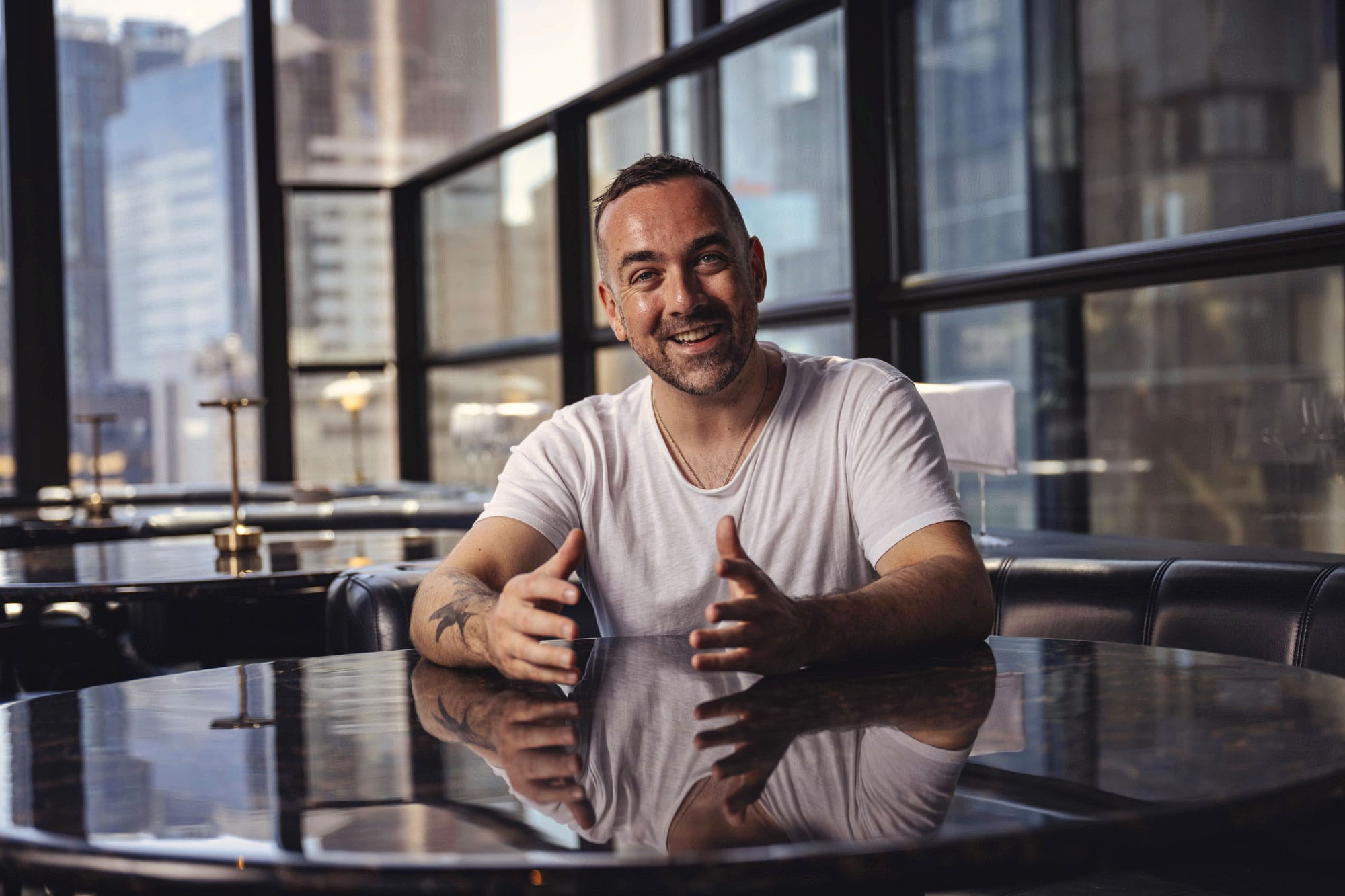
BOOTHBY: How’d you go about that?
ROSS BLAINEY: I decided to do it. There literally wasn’t a way around it — I just had to do it.
BOOTHBY: You just got up and did it.
ROSS BLAINEY: I just studied to make sure I knew enough. With anything I’ve done, I always feel like when I get the chance to do it, I’m not qualified enough, but that’s not necessarily a bad thing.
It’s not quite like imposter syndrome — it was more I need to make sure I’m really on this. So I remember studying whisky for a month and a half till I actually started a job. And same with bit of public speaking stuff. Which to be honest, I don’t know how you can study that. I think I just found a way that was going to work for me. And one of them was knowing my subject.
BOOTHBY: How long was it before you felt you weren’t nervous about getting up in front of people?
ROSS BLAINEY: That’s not happened yet. Every time — I’m always nervous. I think it’s a good thing. I think if you’re not nervous, you don’t care enough. It’s really helpful. It keeps you on the ball.
BOOTHBY: You can think about nerves as a bad thing, but you can also think about it as being exciting.
ROSS BLAINEY: I try and do that, but I can’t really turn my brain around like that. It’s like, no, no, you’re nervous.
BOOTHBY: There’s an element of once you’re up there, you have to do this now.
ROSS BLAINEY: There’s no turning back. What I eventually did is, I like anchor points so I knew I could meander off and talk about things, but I have anchor points which were attached to each one of the whiskies. I’d be happy wandering off but then if at any point I lose it or feel like I’m losing the room, I go back to that anchor point.
BOOTHBY: Was there anyone that you watched that you learned things about presenting?
ROSS BLAINEY: James Buntin was a big inspiration, he’s an amazing storyteller. He’s so good at what he does. He can just hold the audience so well, he holds the room. I think, and it would probably be the same for him, but there’s an element of Billy Connolly, too, not that I would expect what I do is anything like that, but there’s an influence of his.
BOOTHBY: For everyone in Scotland.
ROSS BLAINEY: Probably, yeah. It’s the way he wanders off topic. He disappears all the way over here and then he brings it back to the topic. I remember the first time that I did that, it wasn’t really intentional. It’s probably influenced by Billy Connolly.
BOOTHBY: How did your role change since those early days? How do you think about what you did then as opposed to now?
ROSS BLAINEY: The role changed a lot. I was really grateful to my bosses at William Grant & Sons for letting me do more. It just expanded.
BOOTHBY: There’s you putting your hand up.
ROSS BLAINEY: I think once I’d got the first part, I thought, why don’t we add on to this and make it a little bit better and more interesting for me, but also being helpful for everyone else around. I mean, the basic part of an ambassador role is communication, education, and you’re doing bar trainings, consumer events, building those relationships. That’s what you need to be able to do. But then building on from that, building larger campaigns and on-premise campaigns. The more I understood the brands, the more I was allowed to offer ideas on what we could do.
BOOTHBY: How did the work with fashion designer Jordan Gogos, where you’re really pushing outside of that traditional hospitality and tastings ambassador model — how did that work?
ROSS BLAINEY: That was a big one. There were three projects that all started at the same time in 2020, in between lockdowns. It was working with Jordan Gogos and Fashion Week, Chase Shiel on the sneakers that we did for the Glenfiddich Grand Cru release — very expensive, limited edition. And then the third one was The Balvenie, we had five craftspeople who we worked with, collaborating with all five of them. So we did boots with a bootmaker, a guitar with a guitar maker, ceramics. It was an amazing overload, like this isn’t the same job I’m doing anymore. I loved it. And it was because I got to learn about what all of those people did, people who were all super creative and also really nice.
Those collaborations really opened my mind up to how you can do things a bit differently. Whisky fits in with everything. Whisky’s a cultural spirit. It’s been so closely connected with changes in culture throughout time. It still is now. I think it just needs to be in the right place with the right people.
BOOTHBY: Drinks, food, these are things that humans have been doing forever, right? They are the things around which people congregate.
ROSS BLAINEY: And tell stories. Whisky’s got a story to it. It’s hospitality — it’s the only truly big cultural thing that crosses languages and borders and cultures. It’s one thing that everyone understands no matter what background you’re from.
BOOTHBY: How did it feel when you decided to call time on this role at William Grant & Sons, and to go out on your own?
ROSS BLAINEY: It was a difficult decision to make. I am so ingrained in the brand. I absolutely love the brand, the story, the people — genuinely believe in the history of it. So to then decide that you’re going to take yourself out from that? I mean, I’ll probably still be working with them in some way.
BOOTHBY: Nine years of your life at one company. That’s a big chapter.
ROSS BLAINEY: With ambassadors, and I think this is a thing that is probably good to be aware of, and it’s not a bad thing, is you give up a little bit yourself to be that brand. It’s an exchange where you take a bit of it on, it fitted, it’s not unauthentic, it’s just that you take it on. But then have to realise when you’re leaving, there’s a whole part of your life that you have to just step away from a little bit.
I think I realised that a couple of years before leaving. Thinking, actually, I don’t want this to be my whole personality, and I started changing up a little bit. It was definitely a tough decision leaving. But I think everyone moves along at some point. I’m sure I’ll be crossing paths with those brands that I love at some point.
BOOTHBY: Were you trepidatious about leaving and starting your own thing?
ROSS BLAINEY: I was thinking about it for a while. Like, how will this work? Apart from the emotional, the personal part of leaving the business, I’ve been pretty excited about it. I was looking for the next challenge. I needed a jump. This is a step change, a jump into something that’s gonna be pretty hard.
BOOTHBY: How are you thinking about what is next?
ROSS BLAINEY: I had some good advice about a year ago from Ryan Chetiyawardana [of the award-winning UK-based Mr Lyan group] actually.
He said, if you can set out and start doing some of these projects, and do some of the work, don’t set up your company or brand and say here’s the whole thing.
It is better to get some of those jobs going and then, after maybe six months or a year in, look at all the things you have done and think, which ones are the work that I really want to do? And then you set up the business and say, here’s what I do.
The simplest way I’m describing what comes next for me, at the moment is that it’s across all the different elements of the things which are influential in culture for people: booze, hospitality, fashion, art, music.
It’s trying to sit in the middle of all those things and working with brands across all of them, and trying to work out the connection points.
Being creative is like being a detective. You’re always just spotting clues. You might spot a clue and have nothing to do with it, but eventually, somewhere down the line you’re like, oh that fits with this other thing I saw two weeks ago.
I want to find cool shit for brands to do that is meaningful, grounded solidly in brand strategy and most importantly, effective for their long term brand growth. That excites me.
BOOTHBY: Do you think you are different as a person today than when you started? What did that job teach you? And what did you take away from that job?
ROSS BLAINEY: The experience that I got from that job was incredible, travelling the world and meeting so many people. It’s got to be one of best experiences you can have, meeting as many people as possible. Just listening to people.
You don’t have to talk all the time. There’s one thing that everyone thinks brand ambassadors always want to be centre of attention — that’s not me. I’ll do that when I need to do it. But going around and listening to people and asking the question about how do they do things? That has got to be the best opportunity to learn.