It’s 1970. Pepe Ruiz is tending bar at Chasen’s, a celebrity hangout restaurant in West Hollywood that opened in 1936, with a who’s who of regulars: Clark Gable, Alfred Hitchcock, Cary Grant, and Marilyn Monroe had all be seen there. But on this night, one of Ruiz’s regulars comes in and sidles up to the bar. This guy, he loves his Martinis, but tonight? He wants something a little different.
“I have to drink the same Martini over and over again,” he says to Ruiz. “Why don’t you come out with something new?”
What Ruiz did next put his name — and Chasen’s — into the lore of bartending and classic drinks forever.
Ruiz lights a wooden match above a Martini glass, and with his other hand, squeezes several orange peels, expressing the oils from the skin of the fruit into the flame; the oils catch alight and flame out, falling into the glass. Next, Ruiz shakes his take — one part fino sherry to six parts vodka — with ice, before straining into the glass. He finishes the drink with a final flamed orange peel, and slides it across to his guest. A ring-a-ding-ding: the Flame of Love Martini was born.
His guest — noted imbiber Dean Martin — was happy. The drink made for Dino became popular at the bar; even Frank Sinatra liked it.
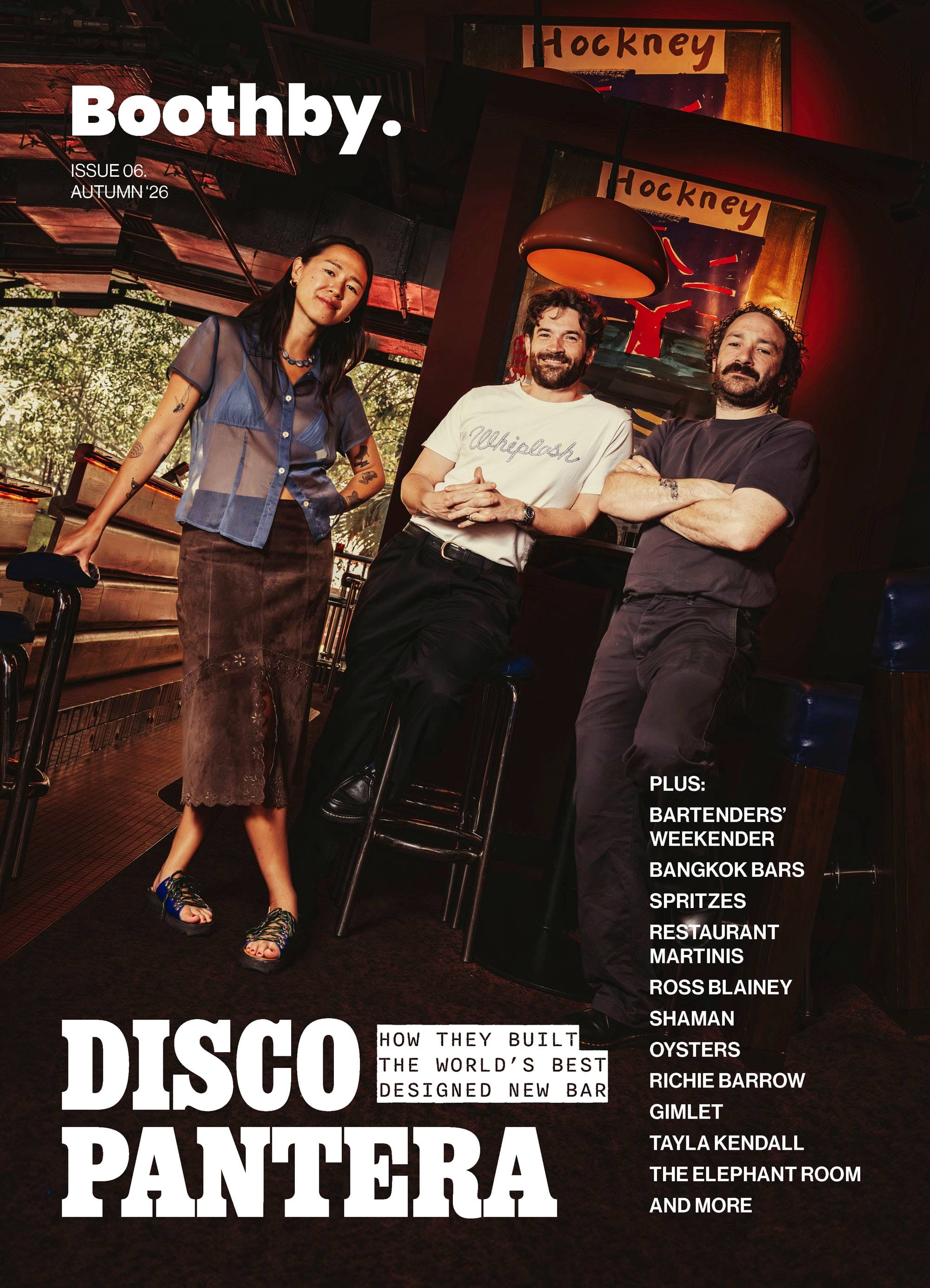
This story appears in the latest issue of Boothby magazine. Get the sixth issue of the magazine, with stories and interviews on Disco Pantera and design, Bangkok bars, Ross Blainey, Shaman, oysters, Richie Barrow, Tayla Kendall, The Elephant Room, kava bars, the beauty of the Spritz, and plenty more. The best way to support the independent bar and drinks journalism Boothby does is to get a subscription to the magazine.
Chasen’s closed up shop in 1995; the world of celebrity had long since moved on from the restaurant. But Ruiz’s cocktail lives on.
A great restaurant ought to have a great Martini; the cocktail, served bracingly cold, has a unique ability to “blunt the day and polish the night,” as Frank Bruni once wrote. It eases the transition into dining, stimulates the appetite, and relaxes the conversation.
“For the guest, the Martini is the perfect first drink of a great meal,” says Matt Linklater, whose unique take on the genre at Melbourne restaurant Zareh landed at number 12 on the 2025 Drink of the Year Top 50. “Cold, dry, aromatic, guaranteed to make you feel a little better at the bottom of the glass than [you did] at the top, and not too much liquid.”
Sydney bartender Sam Cocks thinks that the popularity of Martinis in restaurants right now is a result of a shift in tastes from Negronis. “[The Martini] is more of an interaction than a fixed recipe, with choices like dry, wet, dirty, or with a specific garnish,” Cocks says. “That flexibility makes it easier for guests to order and develop a signature style they can return to each time.”
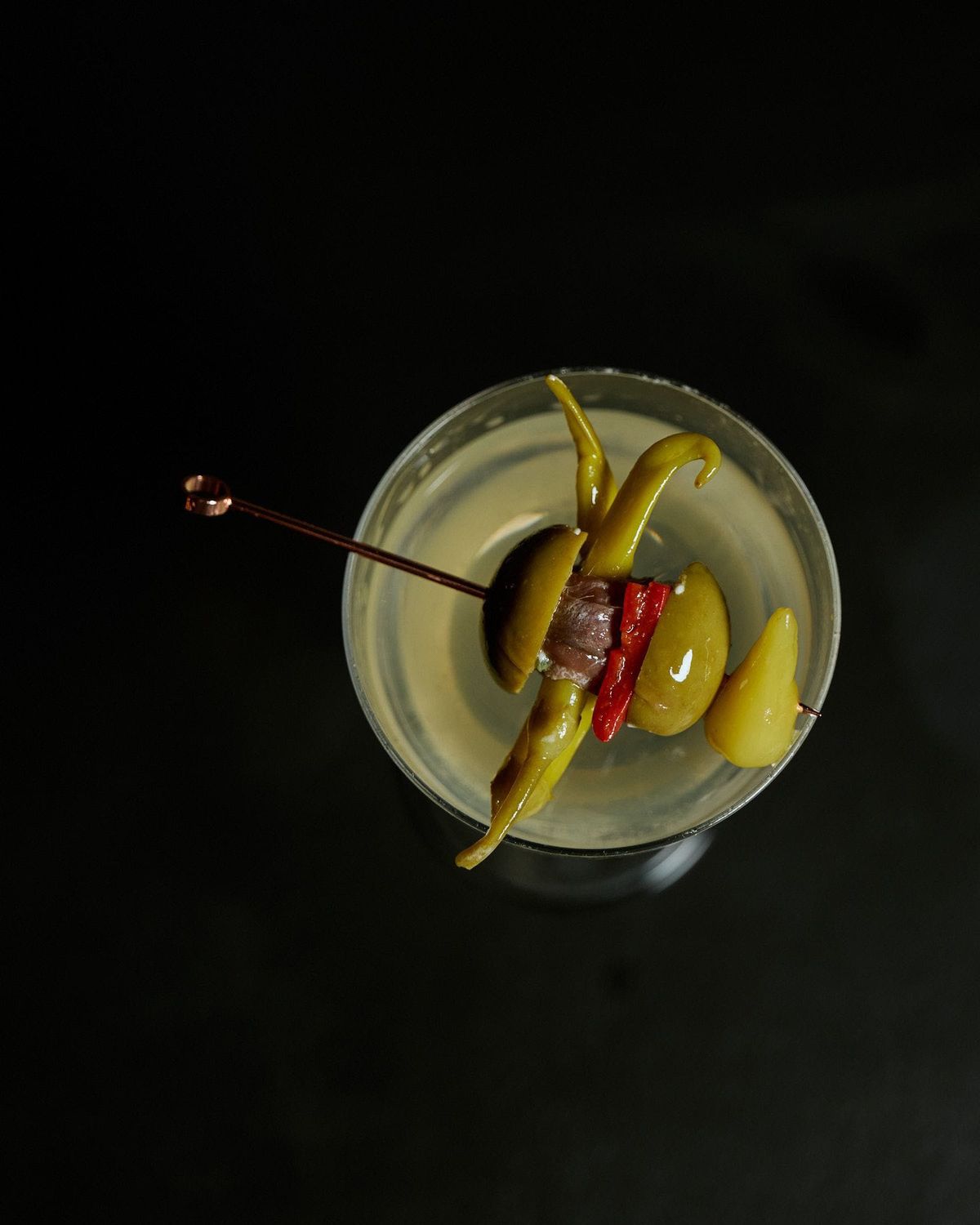
Linklater’s Zareh Martini is built upon gin, but given that chef Tom Sarafian’s food draws on Middle Eastern flavours, so too does Linklater’s Martini pick up accents of the Levant, with arak — an anise distilled spirit that louches when added to water — giving the drink an identity all its own.
And at Saint Peter in Sydney, where Cocks overseas the cocktails, chef Josh Niland has received acclaim for his scale to tail approach to cooking seafood. Cock’s Oyster Shell Martini is an essential — and crucial — component of a guest’s evening, which means the pressure is on to make it count.
“Often guests will begin with a cocktail and then move on to wine for the rest of the evening, which means there’s usually only one cocktail moment to make an impression,” Cocks says. “The goal is to create something that’s both interesting and delicious. At Saint Peter, many tables begin with oysters, and there are few better pairings to start the night than Martinis and oysters.”
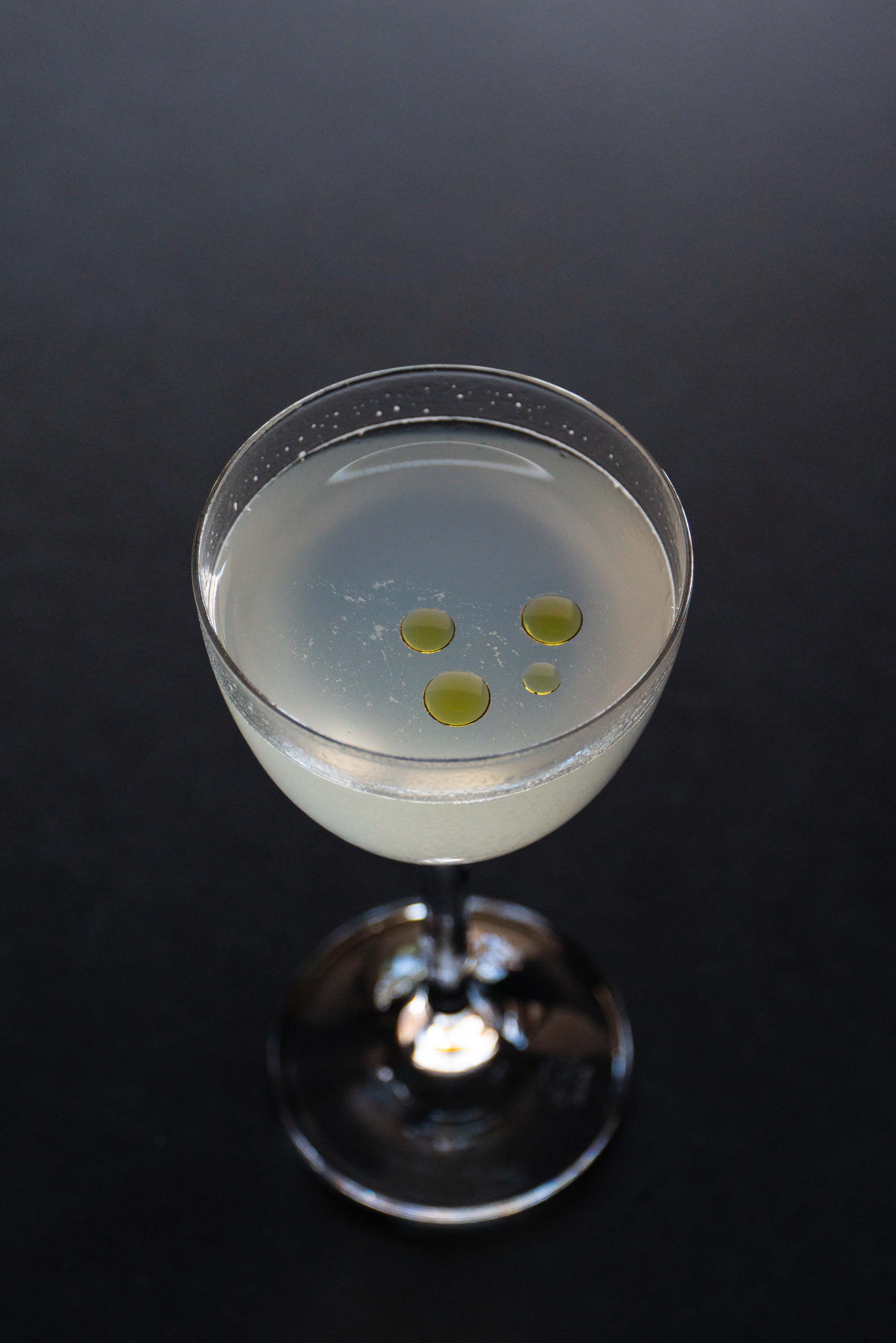
In the same way that Niland tries to use every element of the fish in his cooking, wringing flavour from parts that are often discarded, so too does Cocks coax flavour from produce that might otherwise see the bin. The Oyster Shell Martini employs spent shells, breaking them down with acid to make a solution which he then brings into the glass.
Along with gin, dry vermouth, and a little uni vodka (which he makes by macerating fresh uni in the spirit, before freezing it and slowly straining it), it’s a recipe for one of the crispest, coldest Martinis you’ll find in any restaurant, anywhere.
And given that, as both Cocks and Linklater highlight here, one of the tricks to a great Martini is ensuring the drink is as cold as possible, the bartenders at Saint Peter have a neat trick for that.
“Only half this Martini is poured at the table,” Cocks says, “the other half kept in a frozen sake craft keeping it icy cold.”
Sam Cocks’ Martini advice
BOOTHBY: What do you think are the keys to a great Martini, whether it’s a riff or a classic?
SAM COCKS: Simplicity, temperature, and dilution are everything. At its core, a Martini contains only two or three ingredients, and the best riffs rarely stray far from that structure. Frozen glassware is essential — anything that helps keep the drink as cold as possible. The difference between a good Martini and a bad one usually comes down to dilution. Ingredients and ratios are often similar from venue to venue; it’s the technique and handling that make the real difference.
 Boothby Staff
Matt Linklater’s Martini advice
BOOTHBY: What do you think are the keys to a great Martini, whether it’s a riff or a classic?
MATT LINKLATER: Maybe it’s obvious, but temperature, dilution, ratios and quality ingredients. Whether you’re pre-batching and freezing, or stirring fresh. Wait - can I say a good Martini is batched, and a great Martini is stirred?
Boothby Staff