Welcome to the Boothby Product Dive, an in-depth look at one brand of note. Whilst The Glendronach does sponsor this story, the editorial is Boothby’s own.
In a time when trends flicker on and flicker off at the speed of the internet, where — if you’re not scrolling — the world’s conversation will fly right by you in the stream, there’s something seductively analogue about a whisky distillery celebrating its 200th birthday.
That’s exactly what The Glendronach is doing this year, with 2026 its 200th anniversary.
A milestone like that deserves a good dram — lucky for you, in this product dive, we are taking a look at three good drams from The Glendronach’s Master’s Anthology range of whiskies.
Let’s dive into it.
What you need to know about The Master’s Anthology
The Master’s Anthology from The Glendronach is a non-age statement series of whiskies, of which there are three available: Ode to The Valley, Ode to The Embers, and Ode to The Dark.
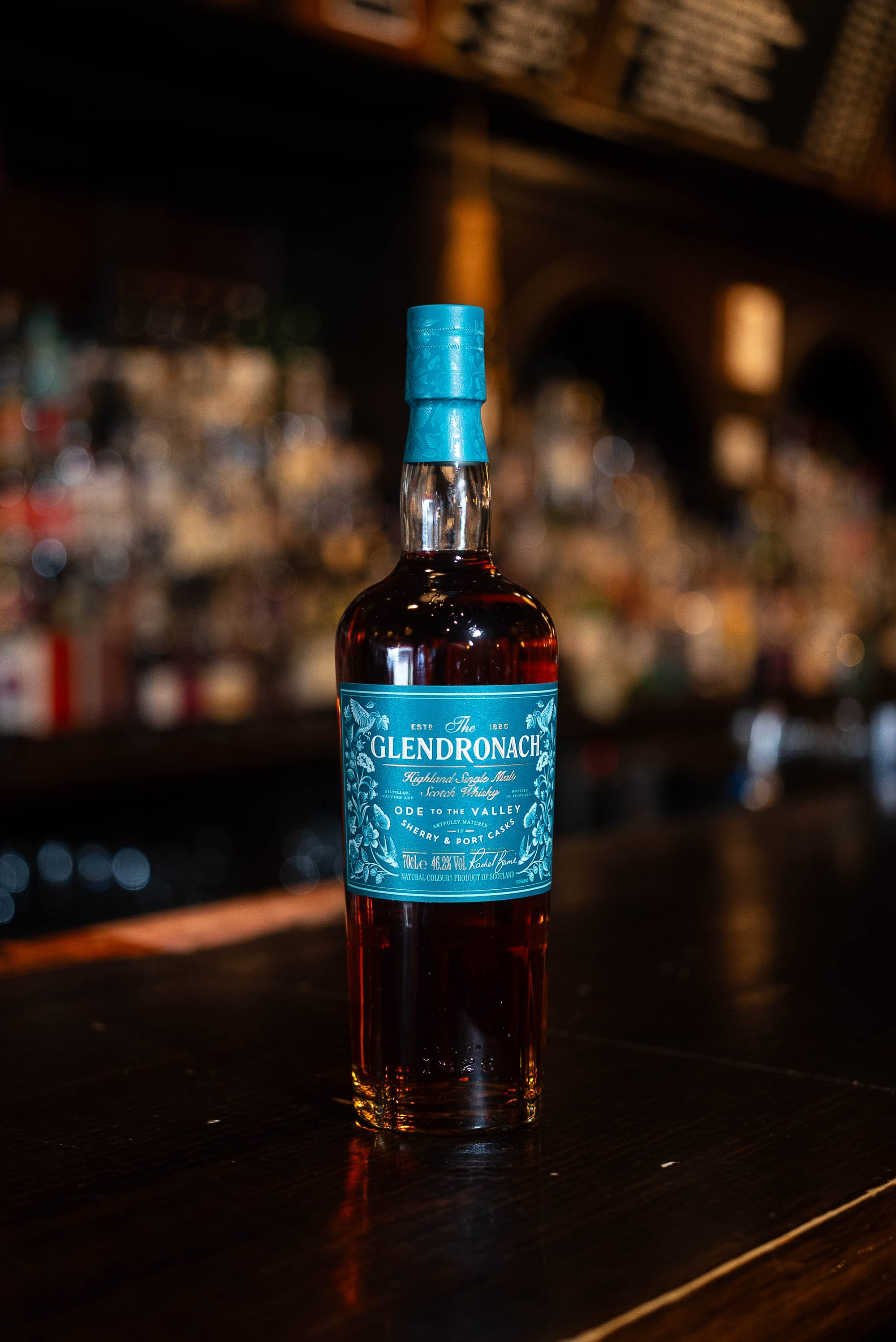
Ode to The Valley (46.2% ABV)
This particular bottling comes courtesy of a combination of barrels during maturation — ruby port casks from Portugal’s Douro Valley are combined with The Glendronach’s usual oloroso and pedro ximénez sherry casks.
“Ode to the Valley sings of an abundance of ripe fruit, it is the landscape of The Glendronach Distillery in full glory,” according to master blender Dr Rachel Barrie.
What they say: The nose here shows “late summer berries and chocolate dulce de leche imbued with sweet demerara and apricot glaze.”
What we say: This bright whisky brims with stone fruit and a touch of grassy lemongrass and almonds on the nose; the palate is full bodied with good mouthfeel, and a restrained honeyed, peach-like, strawberries and cream character. Delicious whisky for the afternoon.
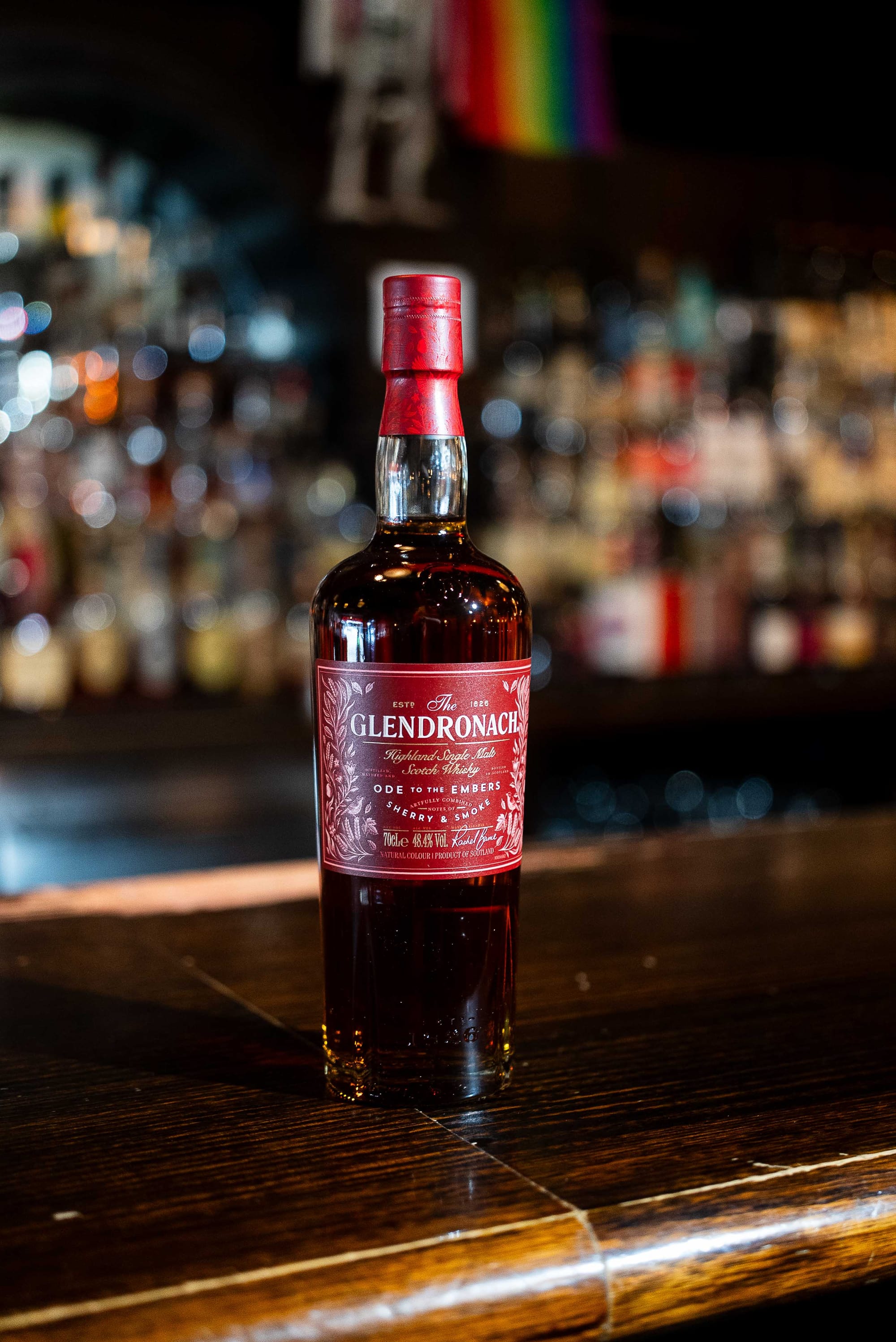
Ode to The Embers (48.4% ABV)
This whisky is a throwback to times past, when the distillery would have used peat in the whisky making process to dry the malted barley. For Ode to the Embers, peat smoke is combined with predominantly oloroso sherry casks, and some pedro ximénez casks.
“Ode to the Embers cloaks warm and rich spice in smouldering wisps of smoke, speaking of the days of old at The Glendronach Distillery,” says Dr Barrie.
What they say: On the nose, “cinnamon spiced toffee, apple and caramelised walnut brittle intertwine with flamed orange on a smouldering open fire.” On the palate, “raisin and honeyed walnut meld with bramble ganache and smoked chocolate fudge.”
What we say: The first elements that spring from the glass is a light smokiness, reminiscent of smoked almonds, underpinned by a rich sherry character. There’s a rich spiced berry flavour on the palate, with the smoke as a frame, with that sherry character coming to the fore on a lingering finish. For those who might not be sure they’re into peated whisky, this might be the dram that gets you.
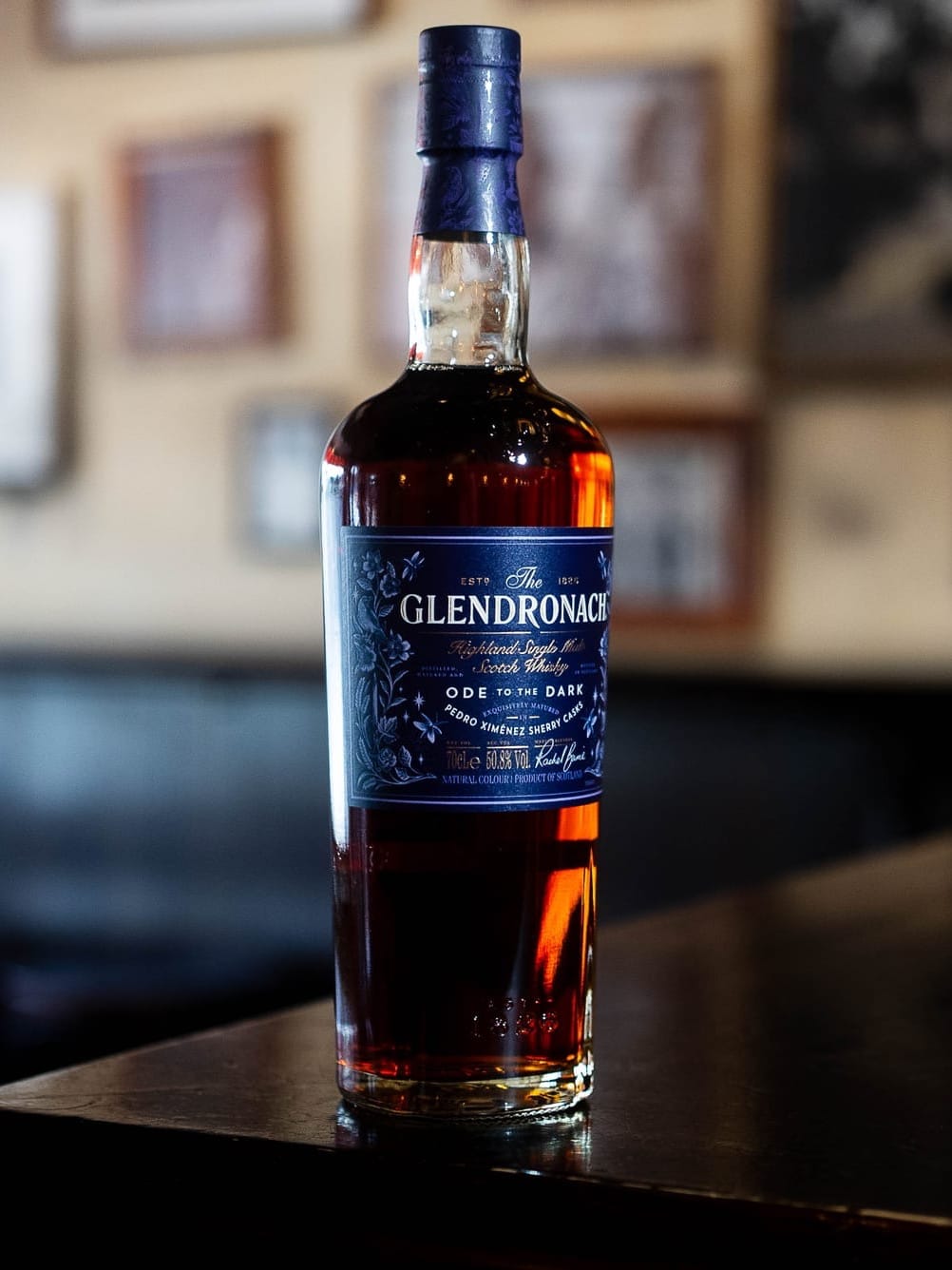
Ode to The Dark (50.8% ABV)
Described as the richest expression in The Master’s Anthology series, the Ode to The Dark is exclusively matured in pedro ximénez casks and bottled at 50.8 percent ABV.
“Ode to the Dark enrobes velvet chocolate over dark plum and black cherry, caramelised dates and coffee, to bask The Glendronach in rich splendour,” says Dr Barrie.
What they say: The nose offers “a symphony of mocha, black cherry and dark chocolate precede crème brûlée with raisin, brown sugar and ginger.” On the palate, “velvet layers of smooth espresso and crème-caramel fold into black grape and mint chocolate ganache.”
What we say: There are rich raisins, date, and coffee aromas on first inspection on the nose, before blackberry and red apple appear; on the full-bodied palate with a touch of oiliness to it, there is some biscuity malt character, toffee, salted caramel, dark berries and rich spice — it’s a generous, layered whisky for late nights or encroaching storms.
A (very) brief history of The Glendronach
The Glendronach story begins 200 years ago — that’s a big anniversary this year — when James Allardice founded the distiller in 1826, in the Highlands in the valley of the Forgue, Aberdeenshire. And it’s that valley that gives the distillery its name: Glendronach is derived from the Gaelic for valley of the brambles.
The distillery has a reputation for being something of a sherry bomb, thanks to its exclusive maturation in sherry casks, which is also a hallmark of the whiskies in The Master’s Anthology range.
How to use it?
The folks at Sydney whisky bar, The Doss House, have a suggestion for how to use The Glendronach Ode to The Dark. New York Sour riffs, anyone?
 Sam Bygrave
How is whisky made at The Glendronach?
The Glendronach — like most other distilleries — stopped malting their own barley back in the 1990s. These days, the distillery uses the Laureate and Sassy barley varieties from Baird’s Maltings, which are then milled on The Glendronach’s Bobby mill, which dates back to 1913.
The distillery has nine large wooden washbacks made from Scottish larchwoood. There are two wash stills and two spirit stills in the Glendronach stillhouse.
The shape of the still makes for a “very robust and characterful spirit, which then marries perfectly in the finest sherry casks,” according to master blender Dr Rachel Barrie.
The resulting spirit is aged on site, and they have three dunnage warehouses and three racked warehouses. They employ a mix of Pedro ximenez and oloroso sherry casks for the bulk of their maturation, though there are other cask types on site, like the ruby port casks required for the Ode to the Valley.
Want to learn more?
You can find the new bottles of The Glendronach landing on back bars this month. To learn more, get in touch with your Brown-Forman sales representative or visit glendronachdistillery.com.