One of the remarkable things about a career in bartending is where it can take you. The guest shift phenomenon isn’t going anywhere, and if you ask us, that’s a good thing.
The more opportunity there is for bartenders to travel, swap stories, and share inspiration, the better. It can only lead to richer bar experiences.
And that’s the idea behind Woodford Reserve’s Global Bar Exchange program, which this week brings Korean bar Jangsaeng Healthy Bar to Sydney, with a masterclass and guest shift this Thursday high above the city streets at Aster.
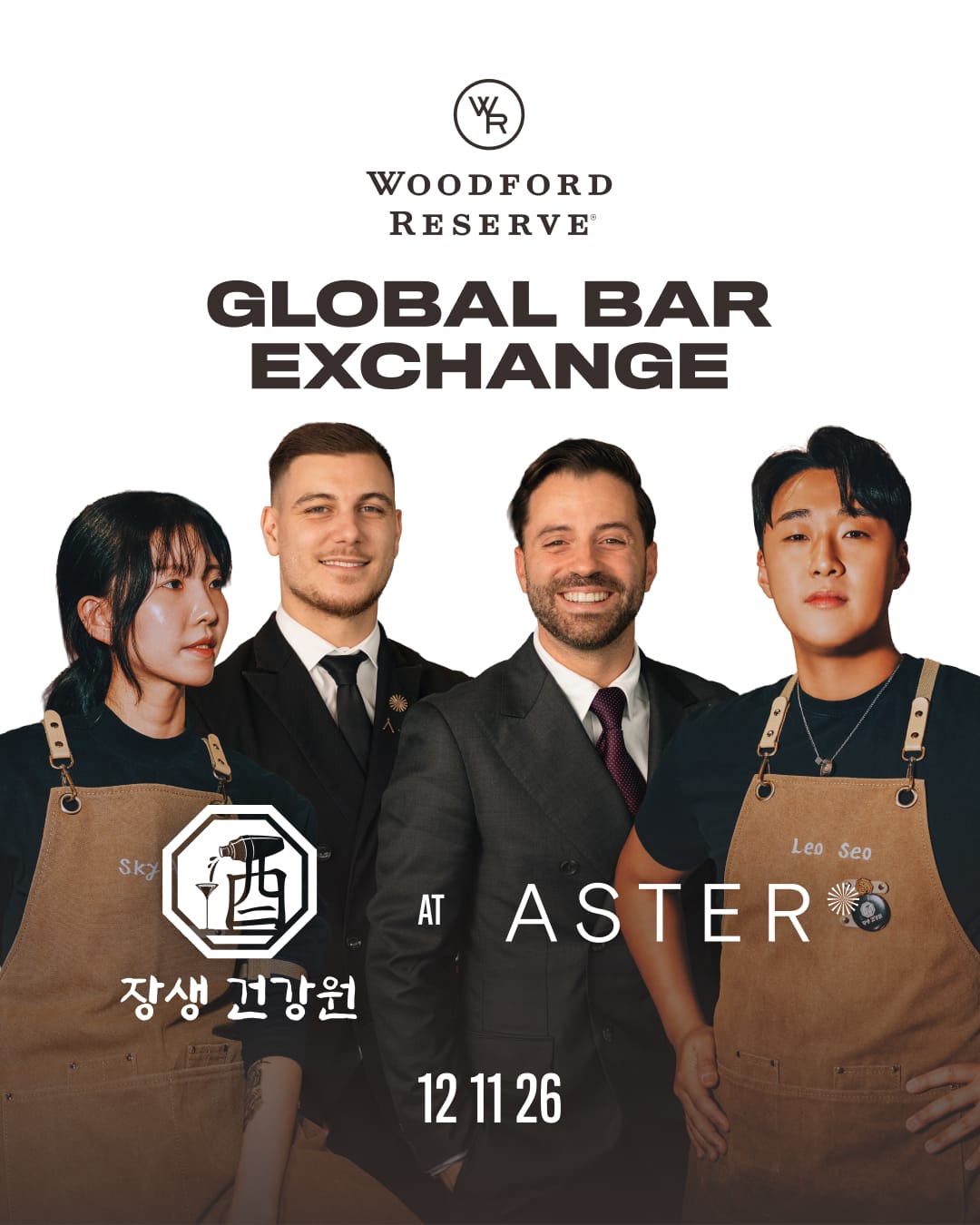
Presented in partnership with Woodford Reserve’s Global Bar Exchange
Thursday, 12 November 2026 | Aster Bar, Sydney Trade Session | 2:00–3:30pm
Meet Leo and Haneul and discover the flavours, ideas and hospitality behind Bar Jangsaeng. RSVP to Linus_Schaxmann@b-f.com to confirm your spot.
Bar Jangsaeng x Aster Takeover | 6:00–9:00pm
A one-night-only celebration of Seoul and Sydney, featuring a cocktail menu inspired by two cultures coming together.
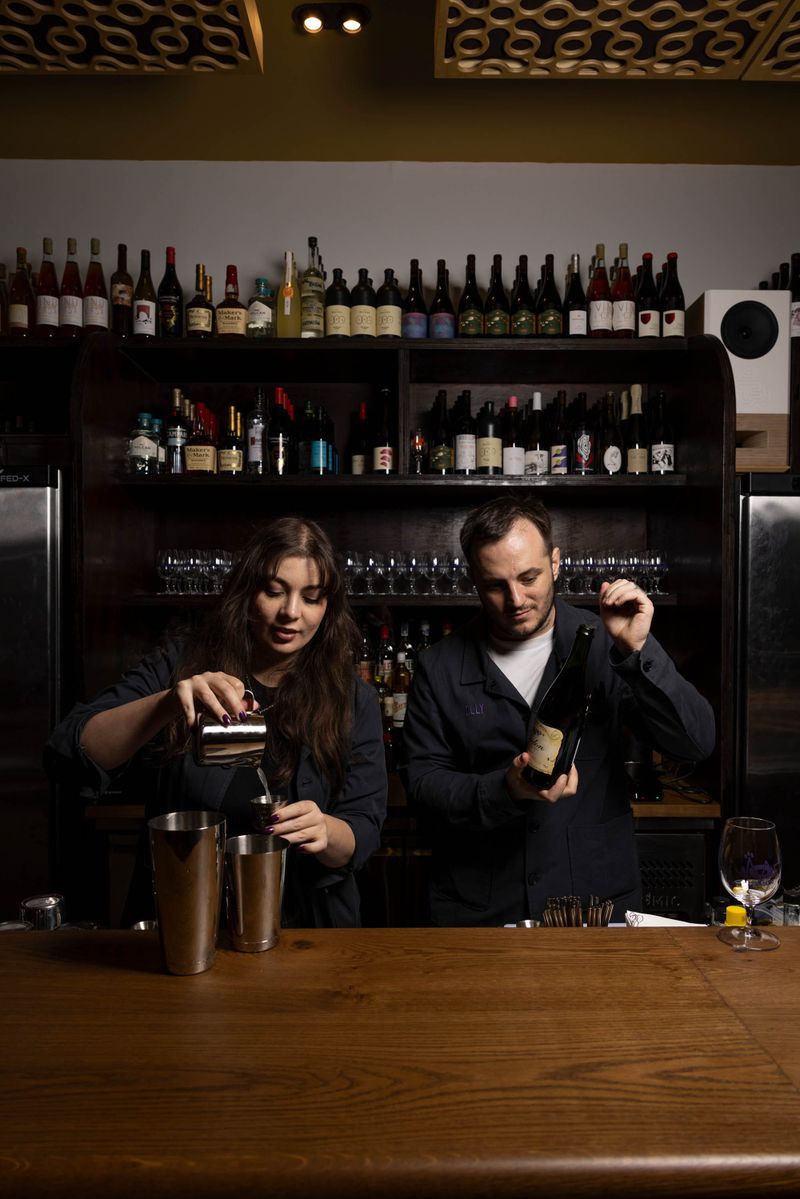
Jangsaeng is located inside a traditional market in Gangnam, and is hyper-focused on delivering drinks with Korean flavours and ingredients. Bartender owner Leo Seo and bartender Haneul ‘Sky’ An will be on hand in Sydney, after having had the Aster team at their bar for the first leg of the global exchange a fortnight ago.
The masterclass runs between 2pm and 3.30pm on Thursday afternoon, followed by a takeover with Aster from 6.00pm to 9.00pm.
Below, Seo tells us a bit about the unique bar, their embrace of Korean ingredients and flavours, and what you can expect at both the masterclass and the takeover.
We’ll see you there!
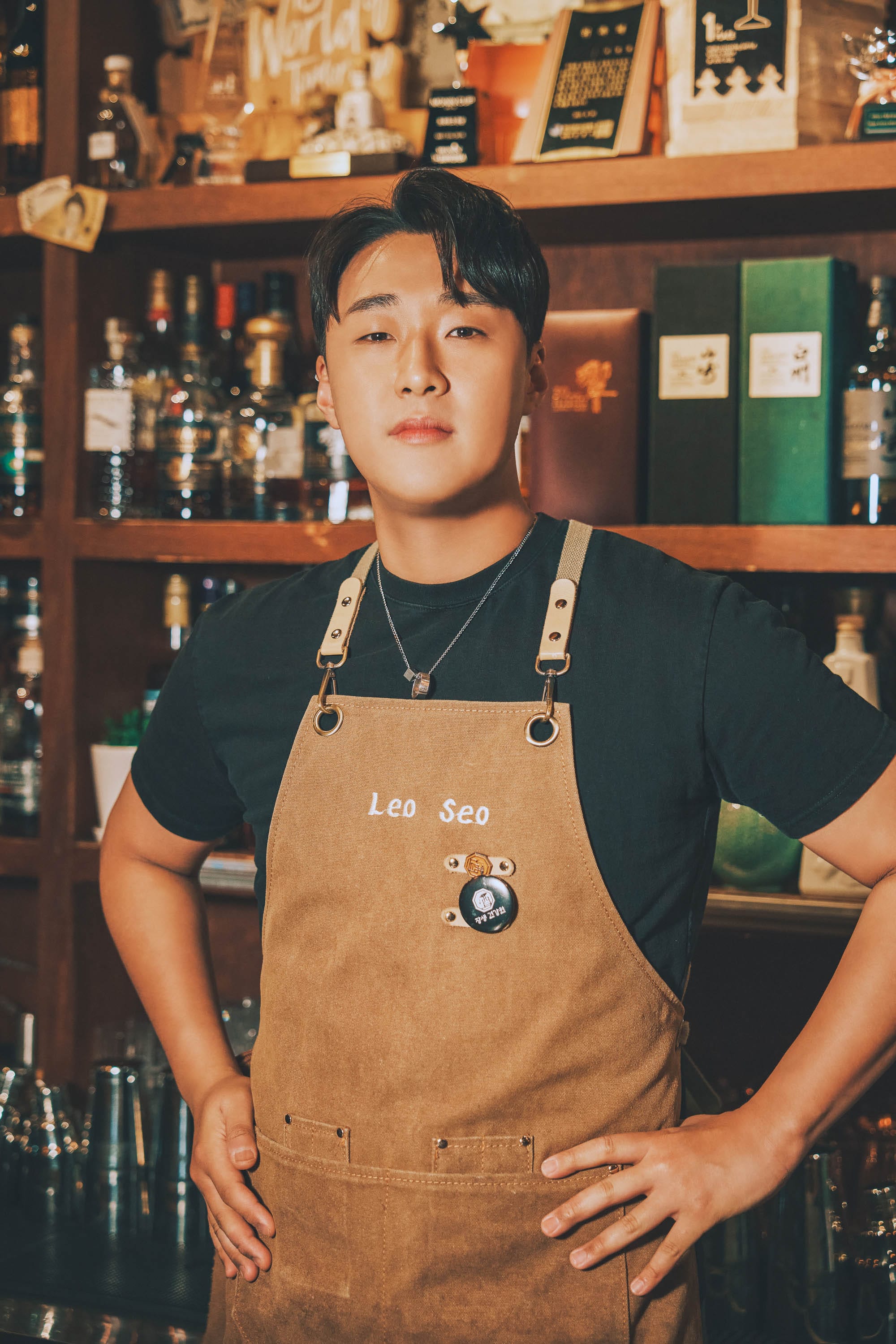
BOOTHBY: Tell us about Jangsaeng. How would you describe it to people who haven’t been there yet?
LEO SEO: Jangsaeng Healthy Bar is located inside Yeongdong Traditional Market, a hidden piece of Korean heritage in Gangnam, one of Seoul’s busiest and most modern urban districts.
For us, the location itself is perhaps the most important part of our identity. Before we opened, the space had been home to a traditional Korean health tonic shop for around 20 years. Rather than replacing its identity, we decided to preserve the original sign and bring new life to the space.
The concept of Jangsaeng comes from traditional Korean health tonic shops, where medicinal herbs and natural ingredients have long been used to prepare herbal remedies and health drinks. Initially, this gave us an identity inspired by traditional Korean herbal medicine, almost like an old-fashioned apothecary.
However, we realised that focusing only on medicinal herbs would limit our creativity and the range of cocktails we could offer.
Being located inside a traditional market gave us an opportunity to take the concept much further. Rather than limiting ourselves to herbal ingredients, we began working closely with local market vendors and exploring ways to transform traditional Korean dishes and familiar food flavours into liquid form.
We describe this approach as “liquidising Korean food culture.” Sometimes we use medicinal herbs, and other times we pay homage to iconic Korean dishes by reinterpreting them as cocktails through modern techniques.
When we first imagined Jangsaeng, our goal was to create an irreplaceable bar. But what actually makes a bar irreplaceable? We believe the answer lies in how deeply a bar reflects its local community, its unique character, and the cultural identity of its country.
And for us, the most important word is local.
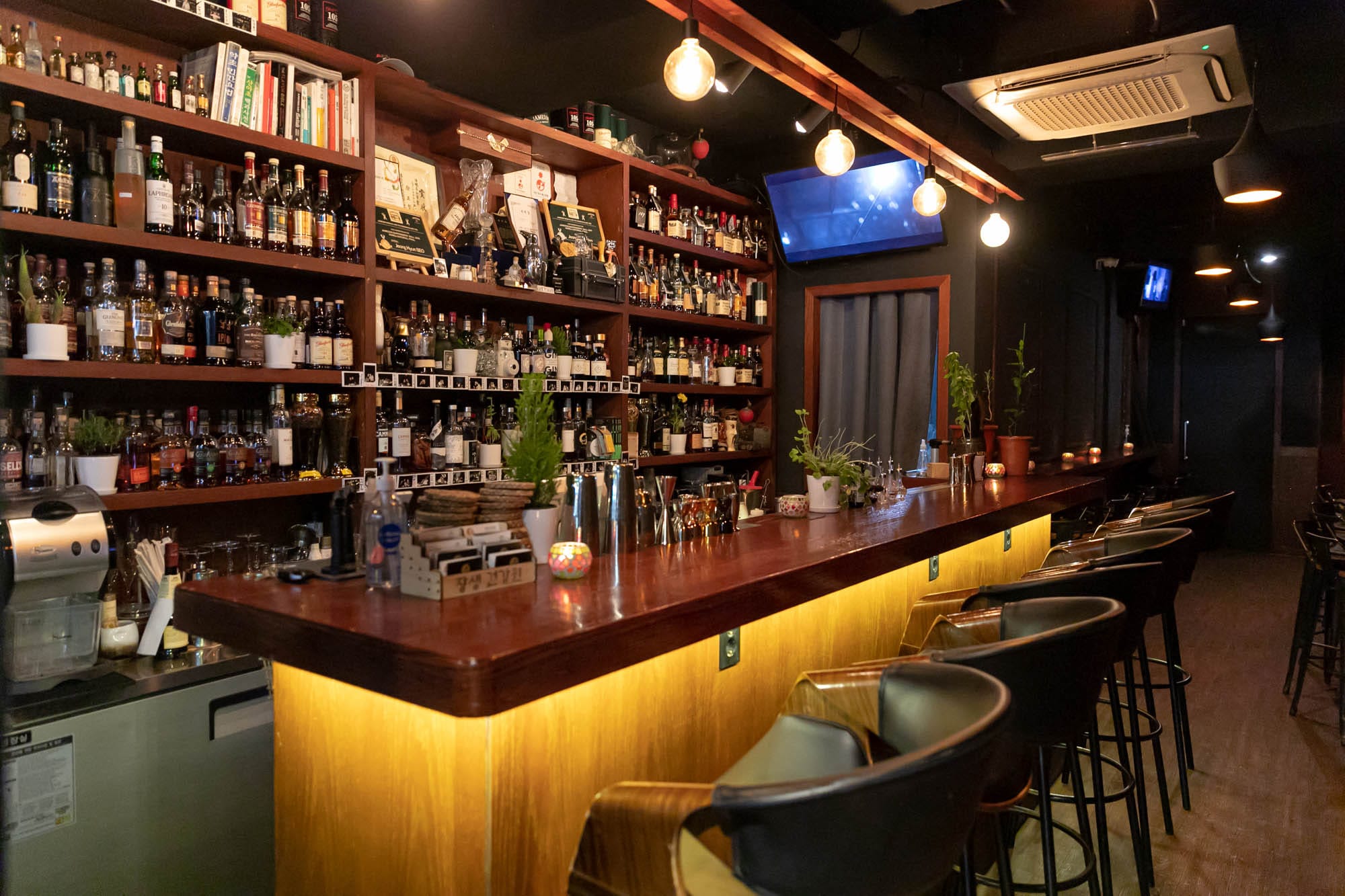
BOOTHBY: What do you do differently from other bars? What makes Jangsaeng special?
LEO SEO: We believe what makes Jangsaeng special is not simply the use of Korean ingredients, but the way we connect those ingredients to the people, culture, and community around us. Our bar exists within a living traditional market, surrounded by vendors who have dedicated decades of their lives to their businesses.
Two words are especially important to us: mutual growth and coexistence. We don’t want Jangsaeng to be successful on its own while the market around us is left behind. We want to grow together. That’s why we actively source ingredients from local vendors, collaborate with them on a daily basis, and look for ways our business can contribute to theirs.
Our relationships with long-established market businesses, including medicinal herb suppliers and food vendors, are not simply about purchasing ingredients. They’re about maintaining a genuine connection with the people who give the market its identity.
At the same time, we take familiar Korean flavours and reinterpret them through modern cocktail techniques, creating something that feels both deeply rooted in tradition and entirely new.
This approach creates opportunities for local vendors while giving Jangsaeng an identity that cannot easily be replicated elsewhere.
Our goal has always been to create an irreplaceable bar experience — something that cannot simply be copied or recreated somewhere else.
Because for us, the true identity of Jangsaeng isn’t just what’s inside the glass. It’s everything and everyone behind it.
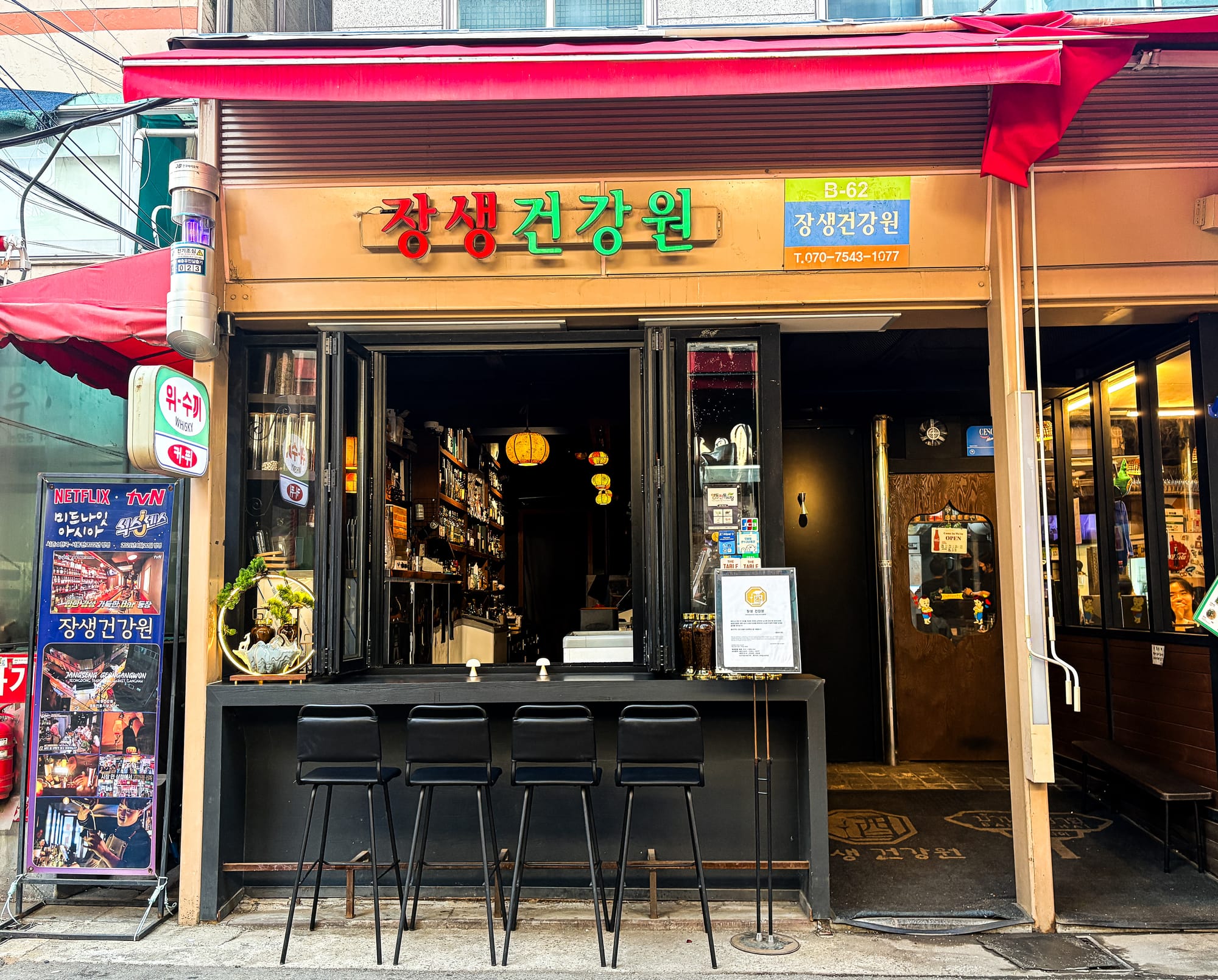
BOOTHBY: How long has the bar been open, and how have people’s drinking habits in Seoul changed over that time?
LEO SEO: Jangsaeng first opened in April 2019, with our official opening on 1 June that year. We’re now celebrating our seventh anniversary.
Over the years, we’ve witnessed significant changes in Seoul’s drinking and cocktail culture. In the past, drinking culture in Korea looked quite different from what we’re seeing today. If you’ve watched Korean dramas or films, you’ve probably seen people sitting together at traditional street food stalls, sharing bottles of soju and enjoying food late into the night. One of the most recognisable symbols of Korean drinking culture is Green Bottle Soju.
This is a type of diluted soju, typically made by diluting highly concentrated distilled alcohol with water, rather than the traditional method of distilling fermented grains directly into soju. It’s affordable, widely available, and has been deeply connected to everyday social life in Korea for decades.
But behind this familiar drink is a complicated and, in some ways, painful part of Korean history.
Traditional Korean soju was originally made by fermenting and distilling grains. However, during the Japanese colonial period, followed by the Korean War, food shortages, and rapid industrialisation, Korea’s traditional alcohol industry went through major changes.
In 1965, government restrictions on using grains for alcohol production significantly affected traditional grain-based distilled soju, accelerating the growth of mass-produced diluted soju.
The familiar green bottle itself became widely popular much later, particularly during the 1990s, eventually becoming one of the most recognisable images of Korean drinking culture. Over time, this affordable spirit became an essential part of Korean social life. Friends and colleagues would gather around Korean barbecue, share several green bottles of soju, and spend hours eating, drinking, and talking.
Even today, when our international bartender friends visit Korea, it’s not unusual for us to share three or four bottles of soju together over dinner.
Soju has never been just about alcohol. It’s also been a way for people to connect, celebrate friendships, and share their everyday lives.
But recently, we’ve noticed a significant shift. Even around Jangsaeng, where traditional street food stalls and drinking spots have long been part of the neighbourhood, we’ve seen businesses struggling and some putting their premises up for lease. People are becoming more conscious about how they spend their time and money.
Since Covid, staying home, watching Netflix, and enjoying entertainment in a more private setting have become increasingly familiar habits. At the same time, interest in wellness, wellbeing, and healthier lifestyles has grown. We’ve even come across the idea of people going to clubs with coffee instead of alcoholic drinks!
For those of us who grew up around Korea’s traditional drinking culture, it’s quite a cultural shock. But we believe the most important point isn’t simply that people are drinking less. It’s that the reasons people choose to drink and visit bars are changing.
Guests are no longer necessarily looking for a bar simply to consume alcohol. They’re becoming more selective about where they spend their time and money, and increasingly value authenticity, uniqueness, and meaningful experiences.
We believe this creates both a challenge and an opportunity for bars.
To survive and remain relevant, bars need to become more distinctive, more connected to their communities, and more meaningful to their guests.
BOOTHBY: What are you hoping to achieve with the collaboration and exchange at Aster?
LEO SEO: For us, this collaboration is about much more than simply bringing Korean cocktails to Australia. As part of a Global Bar Exchange program, we believe the real value lies in sharing cultures, experiences, ideas, and different approaches to hospitality across borders. It’s an opportunity to build meaningful relationships with bartenders and guests from another part of the world.
We believe hospitality is a universal language, even when our ingredients, traditions, and drinking cultures are different.
Through this exchange with Aster, we hope to introduce a different perspective on Korean cocktail culture while also learning from the creativity, operations, and hospitality of the Australian bar community.
We’re especially interested in how bartenders in different countries develop their own identities, operate their venues, and connect with their guests.
Although our environments and cultures may be different, we believe we all share the same ambition: to create great bars and memorable experiences.
BOOTHBY: Can you give us a little preview of what you will talk about at the masterclass in Sydney?
LEO SEO: Our masterclass in Sydney will focus on a topic that we believe is becoming increasingly important for bartenders around the world: the future and sustainability of the bar business.
We want to share our perspective on the current Korean bar industry, how drinking culture is changing, and what bars need to consider in order to remain competitive and commercially successful. When we talk about sustainability, we’re not simply referring to recycling ingredients, reducing waste, or environmentally friendly practices.
We’re talking about the sustainability of the business itself.
How can we build a bar that remains financially viable, commercially relevant, and genuinely attractive to guests over the long term? How can we develop a bar from a creative concept into a structured, scalable business without losing its identity? And in a world where AI and new technologies are rapidly changing the way we work, what will the role of bartenders look like in the future?
We believe bartenders need to think beyond simply making great drinks. They should also be exploring how to develop original ideas, create content, build new business opportunities, and connect their work with the communities and cultures around them.
For example, through our YouTube channel, we explore the lives and careers of bartenders, sharing their experiences, philosophies, and personal stories.
We want to help people better understand the profession while introducing the perspectives of both Korean and international bartenders.
We’re also exploring ways to connect local ingredients and regional culture with cocktail development and community-based business opportunities. Just as Neapolitan pizza represents the identity of Naples in Italy, every region has its own food, ingredients, traditions, and stories.
Australia is no different.
We believe that discovering these local characteristics and reinterpreting them through cocktails can create opportunities not only for bars, but also for local businesses and regional economies.
BOOTHBY: And what can people expect from the drinks at your guest shift at Aster?
LEO SEO: When people travel to Korea, they usually want to experience something Korean. They want to try our food, discover our culture, and enjoy something they can’t easily find back home.
We believe cocktails should be no different!
At Aster, we want to bring a little piece of Korea to Australia, but not necessarily through the most unusual or unexpected ingredients. Rather than simply turning dishes like Tteokbokki or Naengmyeon into cocktails to surprise people, we want to express Korean ingredients, flavours, and culture.

The art of making fine bourbon first took place on the site of the Woodford Reserve Distillery, a National Historic Landmark, in 1812. The perfectly balanced taste of our Kentucky Straight Bourbon Whiskey is comprised of more than 200 detectable flavour notes, from bold grain and wood, to sweet aromatics, spice, and fruit & floral notes. Woodford Reserve is an innovative bourbon, showcasing a rich and colourful flavour unlike any other Kentucky bourbon.