Welcome to the next in a series of stories showcasing one drink, one bartender, at one great bar. This series is made possible by Brown-Forman's Elevate program — to learn more, contact your Brown-Forman representative.
Whisky & Alement is one of the great Australian whisky bars. The bar began back in 2010, at what was then really the beginning of consumers’ burgeoning love affair with whisky.
16 years on, the bar is still there on Russell Place, and their mission of bringing delicious whisky to the people is still at the core of what they do.
We dropped by recently to talk to co-owner Julian White, over a dram of The Glendronach, and asked him about how they approach their tastings, how they keep their bartenders trained on a huge back bar, and learn more about their journey across the years.
BOOTHBY: How old were you when you opened this place?
JULIAN WHITE: I was just 24. It was not something I ever expected to do. I was still in the middle of a degree in circus arts. I was spending my days climbing ropes and doing handstands, literally. And then I’d come in here on a Friday night, Saturday night, and hardly go home for the weekend.
BOOTHBY: Amazing. How did a degree in circus arts lead to opening Australia’s premier whisky bar?
JULIAN WHITE: It was very much a journey of discovery. Every time we could afford to buy a new bottle, we would put one on the back bar — we opened with 10 or 12 bottles of whisky. But I think the big turning point was was about realising that all of the venues in Melbourne — restaurants, bars, nightclubs — were selling whisky with extra margin on them. They’d run their bar at 70 percent [profit] margin for beers and cocktails, but then whisky was at a 85 percent margin. And we asked why? Now that I look back on it, it was really just a rich old guy tax.
BOOTHBY: Because the people ordering particularly expensive whiskies in those days weren't always necessarily informed, but they might have a certain attitude.
JULIAN WHITE: We thought, well, that's a massive barrier for people who might just find it tasty. So we changed our margins. Back then we were only running 50 percent margin on on the back bar whiskies, which is unheard of today, but we could back then. The rent was half the price.
BOOTHBY: And the the interest in whisky has really boomed over that 16 years, right? You've been there for that resurgence or emergence of people caring about whiskey.
JULIAN WHITE: Absolutely. It's something we carry with a lot of pride actually.
BOOTHBY: How many bottles do you have today?
JULIAN WHITE: Lots. Maybe there'd be four or five hundred open bottles.
BOOTHBY: How do you develop the expertise and knowledge about all those bottles? You have to be a specialist, right?
JULIAN WHITE: Yeah. We recently did an audit of the business with a company, and they really brought to light that we’ve got a lot of tribal knowledge here, and that's great because everyone shares in that tribal knowledge and they feel like they own it themselves, and if they ever do finish working here that they're going to be taking what they've learned away with them. That's that's the beauty of it, that we're we're all learning together. The way do that is by sharing it together, and by questioning each other and testing each other.
BOOTHBY: When you're sitting down with the team and talking through whiskies, how do you break them down? It's one thing to drink a whisky and think, hey that's delicious, but you need to be able to talk about it as well.
JULIAN WHITE: So what we use as a reference point is a spirits judging platform, and uh their method of tasting. First and foremost, look at the colour and ask, is that real or is that not real? You've got to appeal to the eye before you appeal to the tongue.
BOOTHBY: Assuming it’s pleasing to the eye, what are we doing next?
JULIAN WHITE: We're looking at the nose. We'll have a sniff and we want to really think about whether there are the characters of malt whisky first and foremost — we're looking for the cereal grain, how developed, how deep is that? How how many different shades of caramel can we identify and how complex is that sweetness from the grain. The next thing we're going to look at is the fruits of fermentation. How developed are they? If it's just simple, if it's not particularly complex. We'll be looking for whether there are any faults, if there's any overly sulphurous characters from distillation, if there's any off characteristics, butyric acid.
BOOTHBY: You don't want that. Maybe think twice before having a sip.
JULIAN WHITE: Next, we want to think about the oak characteristics. How developed are they? Is there too much oak? Is there not enough? Is it old enough? Is it mature enough?
BOOTHBY: OK so walk us through what you're smelling now, with this Glendronach in hand.
JULIAN WHITE: So the oak on this, there's so many different layers to it. We get some deep rich berries. We get those sort of purple and dried fruit characteristics, but it's not just limited to grape products. You know, there's orange rind in here. There's a little bit of that cranberry character as well as those deep fruits.
BOOTHBY: And that's coming from the spirit or the wood?
JULIAN WHITE: These are coming from the wood I would say, and you know what this Glendronach’s all about?
BOOTHBY: It's got that extra age, it’s eighteen years old.
JULIAN WHITE: That's it. It's also about the diversity of the oak as well. And what they've done here is it’s oloroso sherry casks — that really does give it the extra layers of depth.
BOOTHBY: That’s before you've even had a sip, right?
JULIAN WHITE: Before we've even had a sip. Let's have a sip.
Talking about the palate as a whole here, how does the journey of that richness that we smelt on the nose, how is that moving throughout our palate? What's the viscosity feel like on the inside of your mouth? And then those layers of flavour, how integrated are they? Are they disjointed? You get this wonderful aroma of deep dark fruits on some of these sherry cask matured whiskies.
And I’m getting a lot of those deep, fortified wine flavours. They're all layered very beautifully into the different parts of sweetness from the malt. And that's what we want to be finding for really high scores.
The balance is another one. We want this to be harmoniously compact yet deeply layered. I think it's about a oneness.
BOOTHBY: That's very spiritual.
JULIAN WHITE: Yeah. I feel in touch with my whiskiness. The balance is all focused around making sure that there's harmony between all of these flavours. If one is standing up too far, then the balance is out of whack.
When we're chatting to staff here about new whiskies that are coming on, often we will have reference points. And I find Glendronach to be one of those key reference points because of the consistency of these whiskies, and the credentials on the bottle of Spanish oak, often Spanish oak, and then oloroso sherry casks, pedro ximenez sherry casks. There's so many whiskies out there that say sherry cask on them. But do they have the the credential of oloroso?
The dependability of that is something that we'll always refer to here.
Nestled in the Valley of Forgue in the majestic Scottish Highlands, The Glendronach Distillery has been dedicated to crafting the very finest Single Malts since 1826. Here, our distinct, characterful spirit is matured in rare Pedro Ximénez and Oloroso Spanish oak sherry casks, each one selected exclusively from the bodegas of Andalucía, Spain. This exquisite duality creates the signature richly-sherried style of our prestigious Single Malt Scotch Whisky.
 Sam Bygrave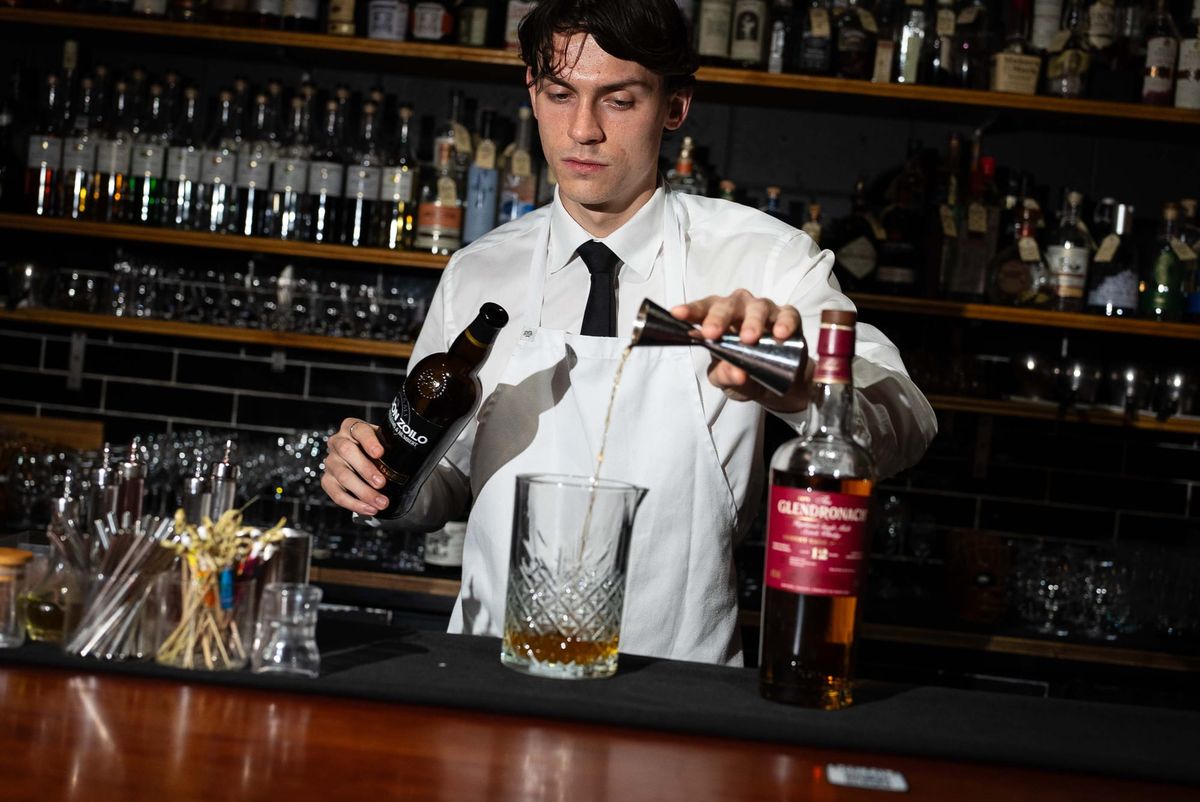
 Sam Bygrave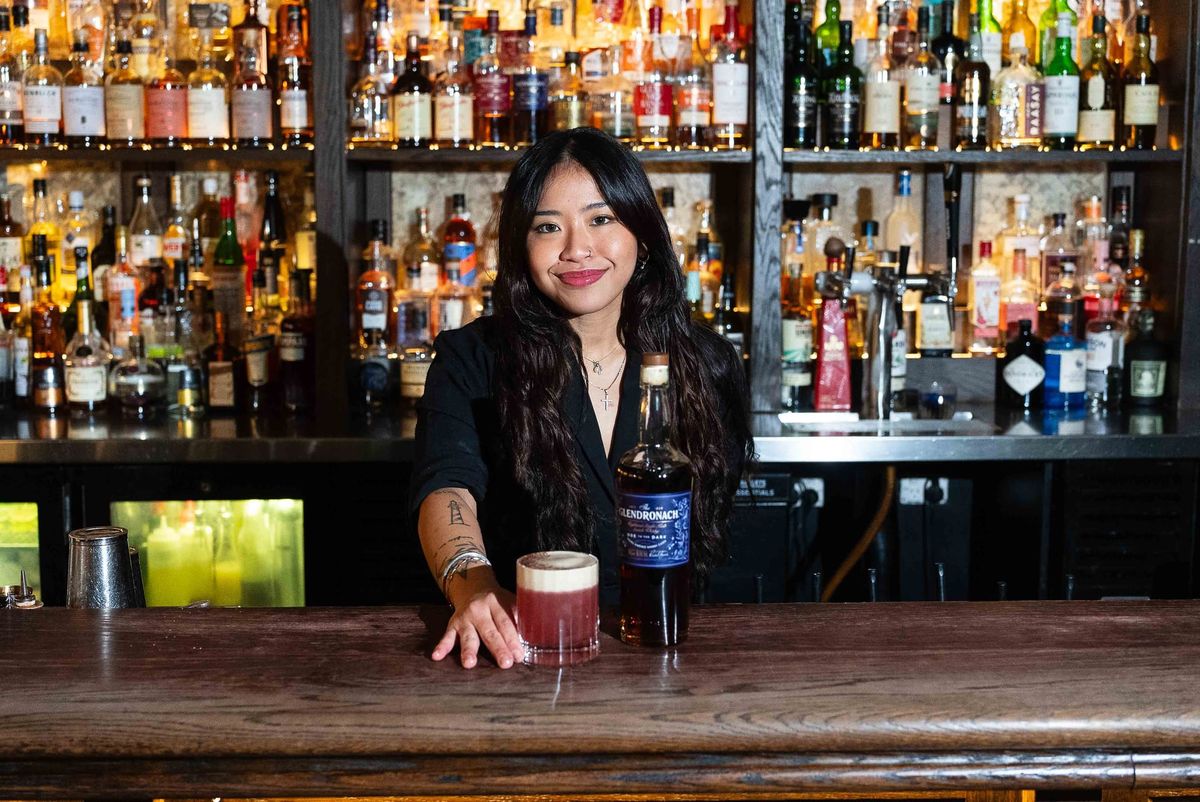
Drink Responsibly. The Glendronach is a registered trademark.